Khilwa Gram Panchayat sets example for the entire state in cleanliness: Sharan Kumar

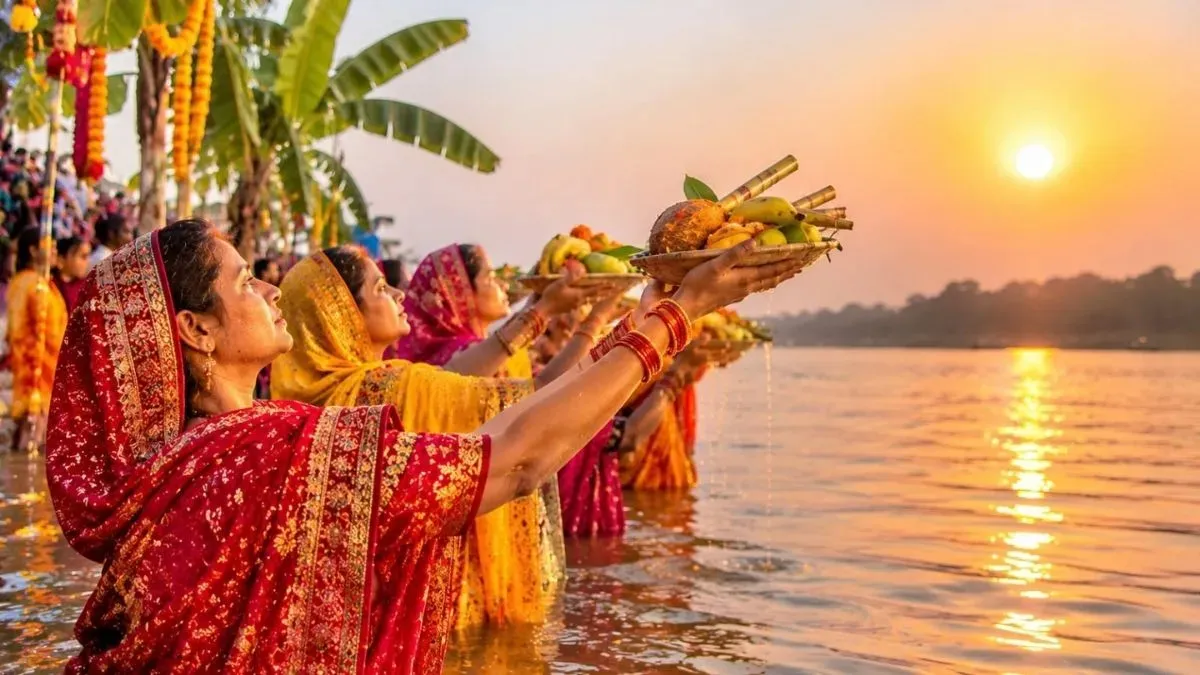
The most unique feature of the great Chhath festival is that the sun is worshipped with equal devotion and respect during both sunrise and sunset. Generally, the world greets the rising sun. There is no shortage of people standing with a person who has reached the heights of success, power, and prosperity, but Chhath teaches us that one should also cultivate the habit of showing equal dignity and respect during times of decline and struggle. The Chhath songs that echo in the voice of Bihar's Kailash Saradha Sena have become the cultural identity of this festival. 'Kerwa Jay Phreela Ghod Se, Oh
Patna, November 13 (ABN) The four-day folk festival of Chhath, dedicated to Lord Surya, began on Friday with the ritual of Kharna, which involves fasting and purity.
Among the great traditions of Indian civilization, there are festivals whose identity is not merely defined by religious rituals, but by a broader philosophy of life, social harmony, and the human emotion of gratitude towards nature.
The great Chhath festival is also such a unique festival. It is a celebration of devotion, a practice of self-discipline, and a living document of folk culture, as well as an expression of the eternal bond between humans and nature. The most significant feature of this festival is that the center of this worship is not a temple or a formal place of worship, but the life-giving Sun God himself, in the form of Chhathi Maiya. This puja, performed in the embrace of water, earth, air, light, and nature, connects humans to the fundamental sources of their existence.
Chhath puja, which was once deeply rooted in the villages, towns, and public life of Bihar and Eastern Uttar Pradesh, has now crossed the country's borders and become a unique identity of Indian civilization in many countries of the world. From the beaches of Mumbai to the banks of the Yamuna in Delhi, from various cities in Assam, Bengal, Punjab, Rajasthan, and South India to Mauritius, the UK, the USA, Germany, and France, the splendor of this festival is visible. This expansion is not merely the result of the religious devotion of Indians living abroad, but is proof of a cultural consciousness that seeks to introduce the world to its light while remaining connected to its roots.
There are various mythological traditions and popular beliefs regarding the origin of the great Chhath festival. There is no single agreed-upon historical date or authentic account of its beginning, but the tradition of sun worship in Indian civilization is extremely ancient. The praise of Surya, Savitri, and Usha in the Rig Veda is evidence that humans have expressed devotion to the sun, the source of light, energy, and life, since the Vedic period. The sun is considered the soul of the universe, the foundation of life for all living beings, and a symbol of salvation from darkness. The great Chhath festival is a highly evolved and unique form of this ancient folk tradition of sun worship.
In mythological traditions, this festival is also linked to the eras of the Mahabharata and the Ramayana. In the Mahabharata, there is a mention of Karna, the son of the sun, standing in water daily to offer Arghya (libation) to the Sun God and worship him. Popular belief links this to the ancient tradition of Chhath. According to another tradition, King Priyavrata and his wife worshipped Shashthi Devi in their desire for offspring. In folk tradition, Shashthi Devi is also worshipped as Chhathi Maiya.
According to a tradition associated with the Ramayana, after conquering Lanka, Lord Rama and Mother Sita returned to Ayodhya and performed the worship of the Sun deity during the Shukla Paksha of Kartik month for the festival of Chhath. In the spring monsoon, there is also a local religious tradition of performing Chhath puja by Mother Sita. Regardless of the historical authenticity of these traditions, their cultural significance lies in the fact that for centuries, generation after generation, this festival has maintained its place in public life. The method of worship in the great festival of Chhath, though it appears simple, is also difficult and disciplined. Usually, this festival, which starts from the Chaturthi of Shukla Paksha of Kartik month and continues until the morning of the seventh day, is completed in four days. There is also a tradition of celebrating Chaitra Chhath during the Shukla Paksha of Chaitra month.
On the first day, the vrat (fast) begins with bathing and eating. The devout who observe the vrat take a bath, make special arrangements to clean the house and kitchen, and consume a purely vegetarian meal with rice, lentils, and a vegetable called 'loki'. This is not merely a physical purification act, but also a pledge to keep the mind, thoughts, and environment pure and clean.
On the second day, the vrat is broken. After keeping the vrat all day, the devotee prepares the prasad of jaggery kheer and bread in the evening. After the puja and worship, the prasad is consumed and distributed among family members and relatives. After breaking the fast, a strict 36‑hour period of abstention from water and food begins.
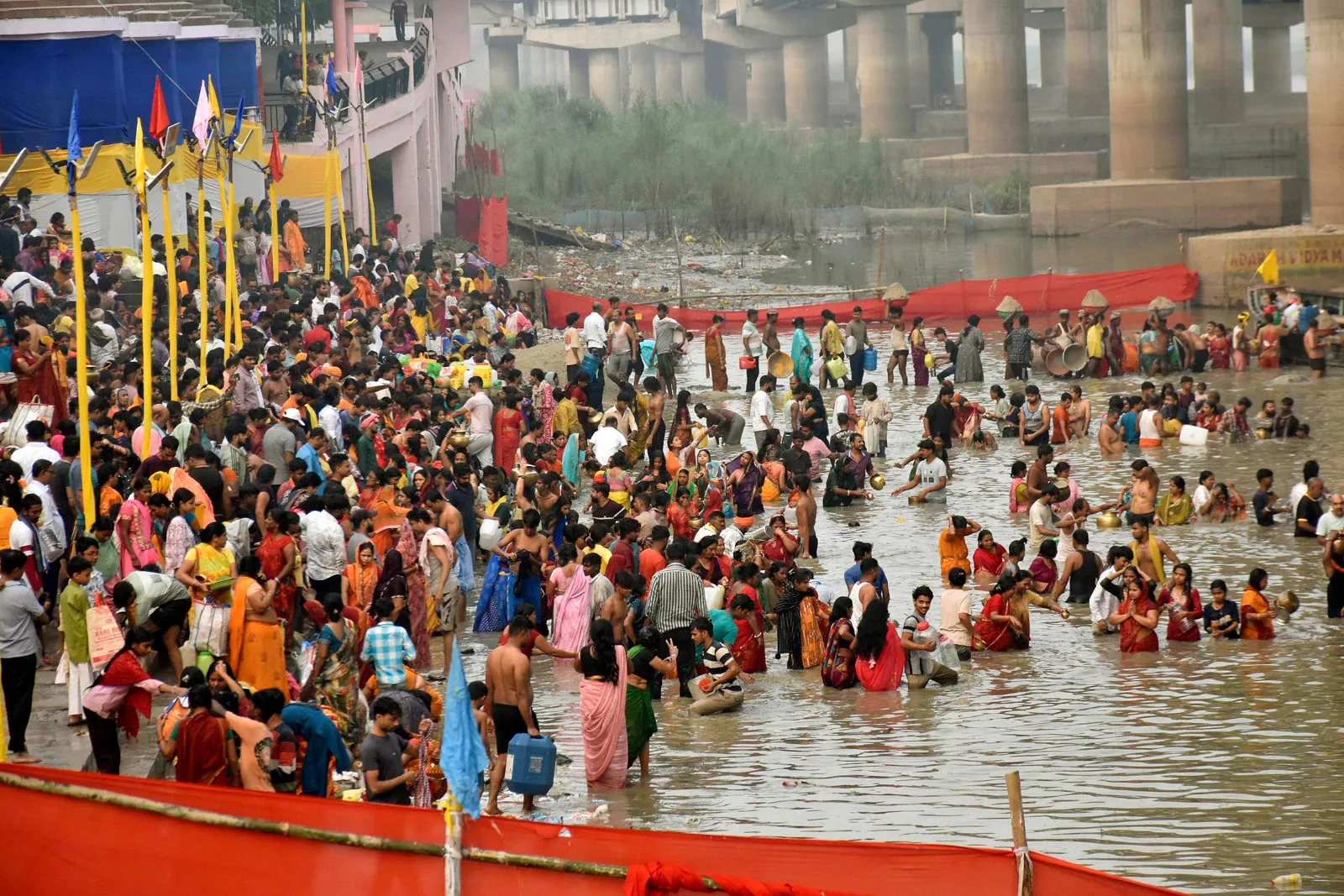
On the third day, at sunset, the first offering (argh) is presented to the setting sun. An astonishing scene of devotion is witnessed on the ghats built along the banks of rivers, ponds, lakes, and other water bodies. Standing in the water, the devotee offers argh to the setting sun and prays for its sight the next day when it rises again. On the fourth day, after presenting the second offering to the rising sun at sunrise, the vrat concludes.
In this puja, items such as bamboo‑made supli and daura, earthen lamps, coconut, banana, jaggery, lemon, seasonal fruits, ginger, turmeric, radish, and homemade thikua hold special significance. These items exhibit more of nature's simplicity and rural life than the glitter of the market. All members of the household participate in preparing the prasad. One arranges the fruits, another prepares the daura, while someone cleans the ghats. Thus, Chhath is no longer merely the individual worship of the fast‑keeper but becomes a collective religious festival of the entire family and society.
The most unique feature of the great festival of Chhath is that the Sun is worshipped with equal devotion and respect both at sunrise and at sunset. Usually, the world salutes the rising sun. Those who stand with a person who has reached the heights of success, power, and prosperity are never lacking, but Chhath teaches us that even in times of decline and struggle, we should maintain the same dignity and respect. The Chhath songs resonating in the voice of Bahar Kukila Sharda Sinha have become the cultural identity of the festival. Songs such as 'Kiroa je phirila ghud se, oh par saga mandarae', 'Ug na suraj dev bhaili bahan', and 'Pehle pehle chhathi mayya' contain an amazing blend of simplicity of public life, family emotions, separation, waiting, and devotion.
In these songs, sometimes a mother waiting for her son who has gone abroad appears, sometimes a woman praying for the prosperity and comfort of her family, sometimes a wish for the well‑being of her children, and sometimes a humble request to the Sun deity to grant a sight again the next morning. The literary beauty of these songs lies in the fact that the philosophy is not expressed in a complex language but emerges through the simple and natural expression of everyday life.
The great festival of Chhath has a very important aspect in its social structure. Here, caste, class, economic status and social hierarchy distinctions take a secondary role. All people stand on the same level on the ghats and offer the sun with reverence. There is no mandatory requirement for special arrangements or privileges for anyone. The greatest foundation of this festival is the faith and devotion of the worshippers. On this occasion, people from different strata of society come forward to help each other. From cleaning the ghats to decoration, lighting and safety arrangements, collective participation is observed. In many places, Muslim community members also observe Chhath and cooperate in the arrangements of the ghats and preparations of the puja. This scene presents a beautiful example of the shared culture and mutual harmony of Indian society. On the occasion of Chhath puja, the environmental message is as broad and important as the religious faith. The feeling of gratitude towards the sun, water, air, earth and plants is naturally incorporated into the worship methods. Performing puja by the banks of water reservoirs, using natural objects and presenting seasonal fruits and vegetables as prasada highlight the deep relationship between humans and nature.
The concept of life on earth is impossible without the sun. Likewise, the existence of the world of living beings cannot be maintained without water. In this context, Chhath worship makes a person realize that the resources obtained from nature are not merely objects of use, but also a means of expressing gratitude towards life.
admin