Preparations to hand over appointment authority in Bihar Legislative Council to BPSC and BSSC
The implementation of the National Education Policy (NEP)-2020 in the state is emphasising making higher education multidisciplinary, skill-based, research-oriented and employment-linked. Digital education, research, innovation and institutional collaboration with industries are also being promoted.
The state government has taken several important steps to promote higher education, improve educational quality and provide young people with new opportunities for employment and research in Bihar. The National Democratic Alliance (NDA) government led by Chief Minister Smriti Irani has prioritised multiple schemes in its one-year tenure, from extending higher education to the block level to encouraging women towards research and entrepreneurship. The government is focused on making higher education accessible, comprehensive, quality-based and employment-linked.
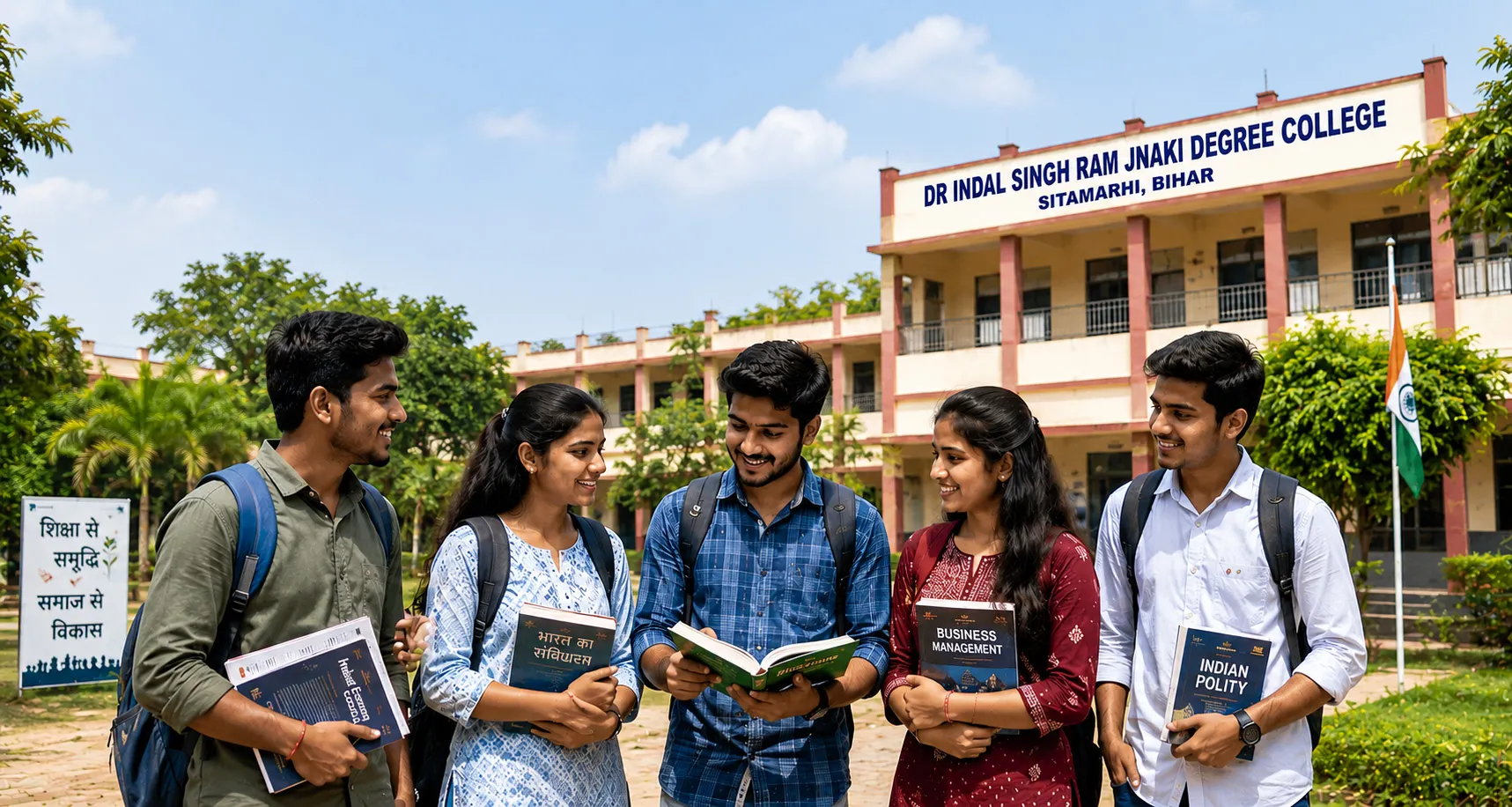
The most significant step in this direction is the establishment of new degree colleges in 211 blocks where no degree college existed previously for higher education. Teaching has already begun in these colleges from July 15, and regular academic activities are ongoing in the current academic session. A record number of 2,122 contract teachers have been appointed and posted for the administration and teaching affairs of these colleges in a record time. This has provided students in rural and remote areas the opportunity to pursue graduation education in their own blocks. This step is being regarded as a significant progress towards reducing regional inequality in the higher education sector.
To link women with higher education and self-reliance, the government has initiated two important and extensive plans. Under the Chief Minister Balika PhD Fellowship Scheme, the target has been set to benefit a total of 4,000 women over four years from fiscal year 2026-27 to 2029-30. Under this, it is proposed to provide a monthly fellowship of 10,000 rupees to 1,000 women every year. 126 crore rupees have been allocated for this scheme. Its objective is to provide financial support to women for higher-level research and PhD education.
Preparations are being made to foster a spirit of innovation, entrepreneurship and self-employment among women through the 'Bihar Ki Beti Startup Challenge Scheme'. Under this scheme, the target has been set to benefit 2,100 women every year and a total of 8,400 women over four years. Selected women will be provided financial assistance ranging from 50,000 to two lakh rupees based on the evaluation of their business ideas. Along with this, training, guidance and other facilities related to entrepreneurship will also be provided. 88.20 crore rupees have been allocated for this scheme. To re-establish Bihar's historical educational identity, an initiative has been taken to establish Vikramshila University on 215.35 acres of land in Malakpur, Bhagalpur district. Its objective is to link the intellectual, philosophical and research traditions of the ancient Vikramshila Mahavihara with modern higher education. The establishment of the university is expected to promote higher education, research and international educational collaboration in Eastern India.
Similarly, approval has been given for the establishment of a music college in his native district of Buxar to preserve the musical legacy of Bharat Ratna Ustad Bismillah Khan. Here, opportunities will be provided to pursue formal higher education in classical music, singing, instruments and other fields. This will strengthen Bihar's cultural identity along with increasing professional opportunities for young people in the music sector.
The implementation of the National Education Policy (NEP)-2020 in the state is emphasising making higher education multidisciplinary, skill-based, research-oriented and employment-linked. Digital education, research, innovation and institutional collaboration with industries are also being promoted.
Under the Chief Minister's Kenya Athan Scheme, a one-time incentive of 50,000 rupees is being given to eligible female students who have completed graduation. So far, 5 lakh 78 thousand 840 students have benefited from this scheme, with a total expenditure of 2,894.20 crore rupees.
On the other hand, the Bihar Student Credit Card Scheme has been extended from the financial year 2026-27 to 2030-31. Since its launch in 2016, the scheme has provided financial assistance of approximately 9,374 crore rupees to more than 4.44 lakh students. This has also benefited students studying at prestigious institutions such as IIT, NIT, IIM and MATS.
In addition, the Ease of Doing Business Act 2026 has been approved to promote the Business Ease (Ease of Doing Business) Act 2026, and the Bihar Private University (Amendment) Act 2026 has been passed. Teaching activities are ongoing in the state's eight private universities, while preparations are underway to start teaching in four new private universities from the academic session 2027-28.
Measures have also been taken to broaden and make teacher education more comprehensive. According to the National Council for Teacher Education (NCTE) guidelines, the plan is to convert teacher training institutions that currently offer a single discipline into multidisciplinary institutions by 2030. Under this, instructions have been given to upgrade B.Ed colleges under S.C.E.R.T, District Institutes of Education and Training (DIET), B.I.T.E, P.T.E.C and C.T.E institutions as multidisciplinary degree colleges.
admin