National
 National
 National
 National
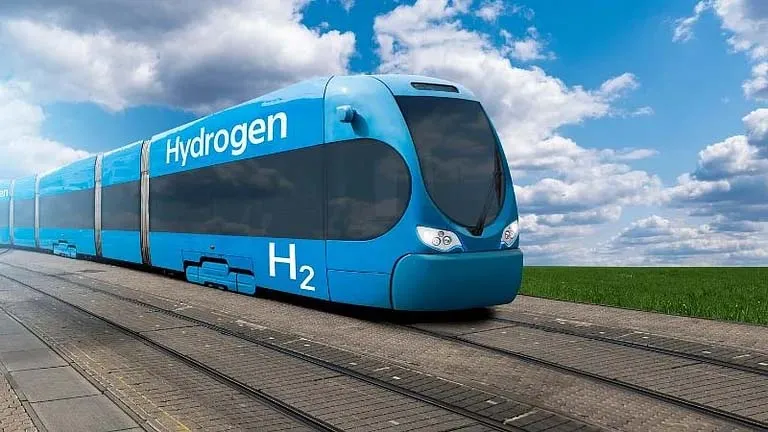
India creates history, country's first Hydrogen train to run between Jind and Sonipat
Awaze Bihar2 min read
The country's first hydrogen train will depart from Jind for Sonipat for the first time after January 20. Two teams from Lucknow's Research and Development Organization (RDSO) have also reached Jind for testing the train and hydrogen plant. These teams are testing the plant's machines, after which they will give the green signal after testing the train's equipment and other materials. This train has been completely designed and manufactured in India.
It is worth noting that this broad-gauge train is the world's longest (10 coaches) and most powerful (2400 kilowatt) hydrogen train. It can carry 2500 passengers at a time. It can travel 180 kilometers on 360 kilograms of hydrogen, meaning it will consume 2 kilograms of hydrogen per kilometer. On the other hand, a diesel vehicle travels one kilometer on 4.5 liters. Its maximum speed is 140 kilometers per hour. This 1200-horsepower train is based on hydrogen fuel cell technology, and its construction cost 82 crore rupees.
The train's coaches were manufactured at the Integral Coach Factory in Chennai, and its testing has also been successfully completed. After Germany, Japan, South Korea, Canada, France, and Sweden, India has become the eighth country to have a hydrogen train. The train has been designed to provide passengers with convenience, safety, and a new travel experience. The train set includes 2 driving power cars (DPCs), each with a capacity of 1200 kilowatts, and a total of 2400 kilowatts of power, with 8 passenger coaches attached.
The train's coaches will open and close like a metro, and the train will only leave the station after the doors are fully closed. This train will run silently, and passengers will experience a comfortable journey. During the journey, fans, lights, and air conditioning facilities will be available. Each coach will have a display, and passengers will be informed about the upcoming station in advance.
This train emits zero carbon dioxide and the only thing it emits is water vapor. The train will only release water and steam while running. Instead of diesel, fuel cells, hydrogen, and oxygen will be used in the engine. With the help of oxygen, hydrogen will burn in a controlled manner, and the generated electricity will charge the lithium-ion battery. During this process, only steam will come out instead of smoke. The train will not only reduce pollution but also reduce fuel costs.
Notably, last year in May-June, three loco pilots from Jind and two from Delhi were trained in Chennai to operate the hydrogen train. After that, in September-October, two loco pilots from Jind were called to Jalandhar and given a month's training. During this time, they were briefed about the intricacies of hydrogen train technology and operation.
Related News
RSS decides to increase focus on youth and women
Awaz E Bihar
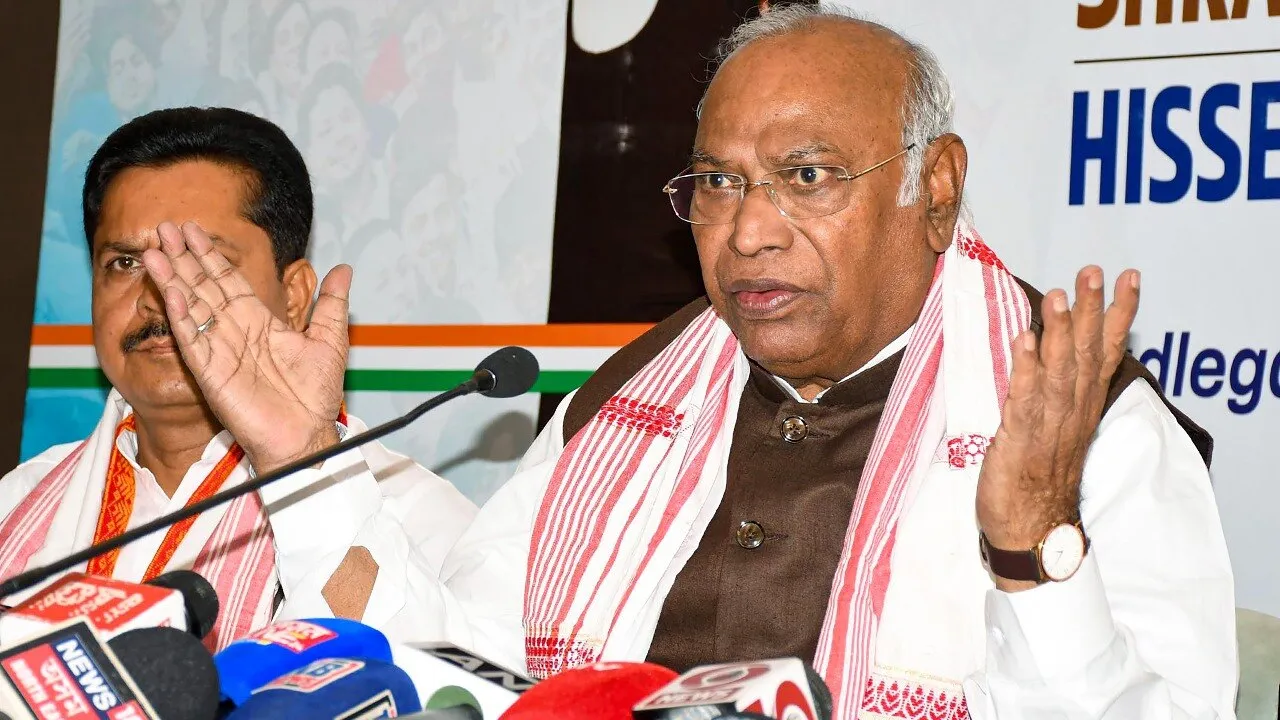
Government hiding truth on clash with China in Arunachal, country should be given full information: Kharge
Awaz E Bihar
Efforts to take the opposition into confidence regarding the women's reservation and delimitation bills
Awaz E Bihar