National National
 National
 National
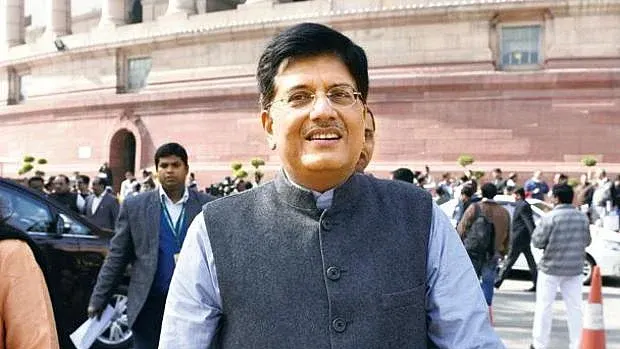
India has emerged as a strategic hub for electronics, semiconductor ecosystem: Piyush Goyal
Awaze Bihar3 min read
Two years after the India-European Free Trade Association (EFTA) Trade and Economic Partnership Agreement (TEPA) came into effect, it is emerging as a strategic catalyst for India's electronics and semiconductor sectors, driving technology cooperation, investment, and supply chain development.
The agreement, which came into force in October, is now facilitating deeper ties between Indian companies and European deep-tech firms, particularly in design, research and development (R&D), and modern manufacturing.
At the beginning of this month, marking two years since the historic agreement was signed, Minister of Commerce and Industry Piyush Goyal said that the agreement is part of India's expanding global trade architecture, opening up new opportunities across all sectors by strengthening industrial capabilities.
"Today, we are celebrating our EFTA agreement, our agreement with Switzerland, Norway, Liechtenstein, and Iceland. Two years ago, in 2024, we finalized this agreement, and these opportunities are complemented by agreements with New Zealand, Australia, Japan, Korea, the ASEAN region, Oman, the UAE, and Mauritius," he said.
He further added that "we are now finalizing an agreement with Canada and have just begun negotiations with the six GCC countries in the Middle East."
According to an official statement, with a commitment of USD 100 billion investment and preferential access to high-income European countries, TEPA presents a strategic springboard for India's electronics sector.
Sharing the current industry perspective, Rajesh M. Revenkar, Vice Chairman of the Electronics and Computer Software Export Promotion Council (ESC), said that the impact of the agreement on the electronics and semiconductor space has so far been "more strategic than transactional," focusing on building long-term capabilities rather than immediate trade benefits.
He said that "the agreement has opened up avenues for European deep-tech firms to enhance design, R&D, and modern manufacturing partnerships in India, particularly in areas like industrial electronics, sensors, and power semiconductors."
He noted that the current phase reflects the formation of a strong foundation for technology cooperation, supply chain integration, and targeted investment within India's electronics manufacturing and ecosystem.
With a committed investment pipeline of USD 100 billion over the next 15 years under the agreement, expectations are that there will be a significant increase in the sector's capabilities. As this investment begins to materialize, India is expected to strengthen its position as a key design and engineering hub for European semiconductor and industrial electronics companies.
This transformation is likely to lead to the creation of employment in high-value manufacturing, innovation, and modern technology areas.
Early signs of this transformation are already visible, with an Icelandic technology company set to invest USD 30 million in a Maharashtra-based firm. This development points to emerging opportunities in areas like medical electronics, smart sensors, embedded systems, electric vehicle components, and marine electronics.
Collaboration with Switzerland and Norway's technology ecosystem is expected to play a crucial role in driving innovation and increasing India's footprint in the global electronics value chain.
Furthermore, the agreement is expected to lead to improved access to specialized components, precision equipment, and modern industrial tools, which will enhance manufacturing performance, support quality upgrades, and strengthen India's competitiveness in semiconductor and electronics production.
As global supply chains rapidly move towards diversification and resilience, the India-EFTA TEPA is positioning India as a preferred destination for technology partnerships and modern electronics manufacturing.
Related News
RSS decides to increase focus on youth and women
Awaz E Bihar
Government hiding truth on clash with China in Arunachal, country should be given full information: Kharge
Awaz E Bihar
Efforts to take the opposition into confidence regarding the women's reservation and delimitation bills
Awaz E Bihar