RSS decides to increase focus on youth and women

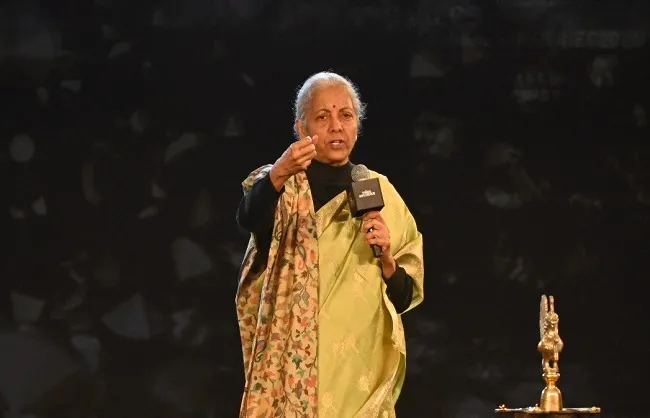
Finance Minister Nirmala Sitharaman on Wednesday highlighted the country's economic strength, saying India can think of becoming a nation that once had a 25 percent share in global trade again in the coming years, riding on its strong and wide economic fundamentals, rapid growth, and a rapidly expanding business sector.
Addressing the India Economic Conclave in Delhi on Wednesday, the Finance Minister said there is a significant change taking place in the global economic landscape, where trade activities are being restricted through import curbs and strategic barriers. She said this development is creating new geo-economic challenges for both emerging and developed economies. However, the Finance Minister clarified that India is fully prepared to engage with the changing global trade environment through negotiations.
Ms. Sitharaman said India will negotiate strongly but constructively to protect its interests while making global trade fair and rule-based. She emphasized that India believes in participation and mutual cooperation rather than isolation and will continue to work with global partners to address gaps in trade.
The Finance Minister said that despite these challenges, India is confident of converting the global uncertainty into opportunities, leveraging its internal strengths. She emphasized that India's growth has been steady and based on public welfare, rather than relying on short-term policy measures.
She said, "India's strength is the real story." Since independence, India has been reacting to the actions of other countries, but now it is time for us to take steps according to our aspirations.
Comparing the work of the Modi government with previous governments, Ms. Sitharaman said it is not that nothing happened before; a lot happened before, but it was scattered. Citing an example, she said that even before, world-class balls were being manufactured in Jalandhar, but they did not get the opportunity to reach the global market. Industries were confined to special economic zones, while the current government is also focusing on small clusters of MSMEs and providing them opportunities to connect with external markets.
The Finance Minister, referring to the last decade, said India has entered a decisive phase of change. She mentioned the rapid spread of financial inclusion, resulting in millions of citizens being part of the formal banking system, and improved access to savings, credit, and insurance.
Ms. Sitharaman said continuous efforts have been made in the social development sector, including facilities for child care, policies to increase women's participation in the workforce, and the supply of affordable housing on a large scale. She said these measures have strengthened economic inclusion and social protection.
The Finance Minister highlighted significant reforms in infrastructure, particularly the supply of clean drinking water to rural households, expansion of highways, and improvement in road connectivity in various regions. She said these investments have helped reduce regional disparities and improve economic performance.
The Finance Minister also emphasized the importance of innovation-based development, citing aspects such as 'Atal Tinkering Labs' in schools, which are promoting scientific thinking and creative talent among students. According to her, such initiatives are necessary for India to be prepared for future technologies.