National
 National
 National
 National
Mumbai witnesses unique iftar for innocent prisoners: Collective call for memory, resistance and justice
Awaze Bihar4 min read
Mumbai: February 27
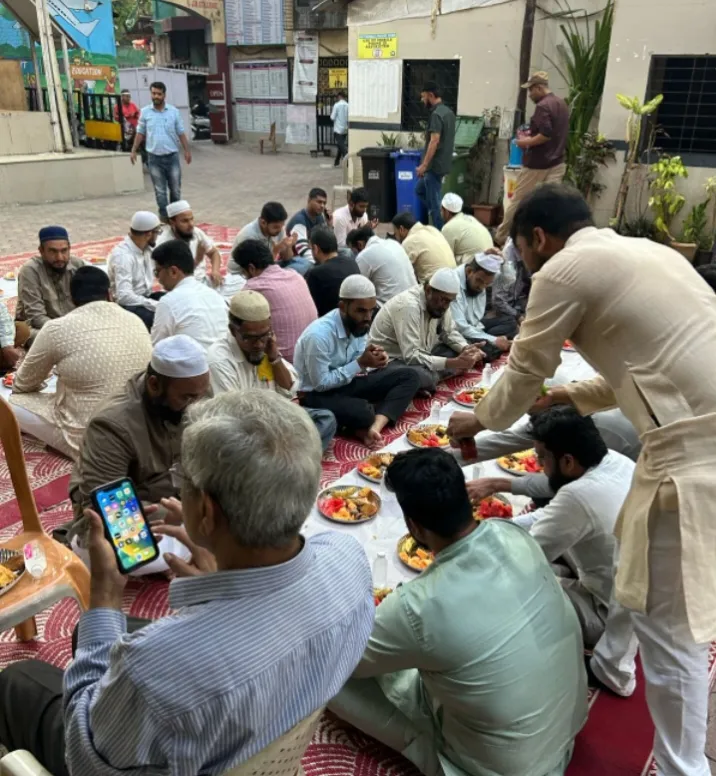
In the blessed month of Ramadan, where mosques and neighborhoods are adorned with spiritual gatherings and iftar parties, this year Mumbai is also hosting an iftar that is unique in its nature and deeply meaningful. On February 28, the Innocence Network will organize a prayer, iftar, and public gathering for individuals who have been acquitted by the courts after years of imprisonment under terrorism and other stringent laws, or are still fighting legal battles after being released on bail.
This iftar is not just a religious ceremony but has become a symbol of justice, memory, and collective consciousness. The majority of participants will be former prisoners, their families, lawyers, and human rights activists. Notably, except for journalist Manisha Bhalta (Dainik Bhaskar), all the speakers are either former prisoners, out on bail, or have been acquitted in significant cases.
Years of Imprisonment, Then Freedom
One prominent name among them is Abdul Wahid Sheikh, who was arrested in the 2006 Mumbai local train blasts case and spent almost nine years in jail before being declared innocent. The case was related to the 2006 Mumbai train blasts, in which several accused were sentenced by lower courts, but later acquitted by higher courts due to lack of evidence.
Abdul Wahid Sheikh is a teacher by profession and, after his release, decided to give his life a new direction. While in jail, he started studying law, obtained LLB and LLM degrees, and later completed his Ph.D. He is currently associated with teaching at Anjuman Islam Ahmed Seller High School in Nagpada, Mumbai. Due to job requirements, he does not practice law but provides legal advice and guidance to those in need.
Two of his books, "Be-Gunaah Qaidi" and "Ashrat Jahan Encounter," have been published, in which he not only narrates his story of imprisonment but also questions the system that keeps people in jail for years on weak evidence.
The Lives of Individuals like Abdul Wahid
The lives of individuals like Abdul Wahid are not restored merely by legal verdicts. Years of imprisonment have economic, social, and psychological impacts on their families. Children's education is affected, families face defamation and social isolation, and even after release, suspicion lingers in society. This is the backdrop that has turned this iftar into a profound social message.
Speakers and Background
The gathering will include Maulana Ghulam Yahya, former Imam of Haji House Mumbai, who was arrested in a terrorism case and later acquitted. Similarly, Mohammad Sajid Ansari, who was recently acquitted by the Bombay High Court after being imprisoned for a long time in the 7/11 Mumbai local train serial blasts case, will share his experiences.
The program will also feature Rona Wilson, who is out on bail in the Bhima Koregaon case, and Advocate Sadique Qureshi, who was arrested in the UAPA case. Young lawyer Advocate Vinod Patel from the Bombay High Court and senior journalist Manisha Bhalta will also address the gathering.
This diversity is a symbol that the gathering is not limited to one religion, sect, or ideology but brings together individuals from different backgrounds on one platform.
Iftar: One Table, Many Stories
On the tenth day of Ramadan, when everyone will gather at the iftar table at sunset, the scene will appear simple, but it will hide stories of years of imprisonment. Stories of false cases, fabricated charges, continuous date extensions, solitary confinement, lack of medical facilities, and long waits for justice will be shared.
Alongside, stories of resilience will also be told—how mental balance was maintained during imprisonment, how families endured economic and social shocks, and how some individuals used law as a weapon to prove their innocence.
Innocence Network has been organizing this iftar for several years as a quiet yet determined initiative. Its purpose is to challenge false accusations and convey that justice is not established merely by the number of arrests or the enforcement of strict laws.
Challenging the Narrative of Division
State narratives often divide individuals based on religion, caste, language, or ideology and reduce them to files and numbers. This iftar challenges these boundaries. Former prisoners, transcending all these divisions, sit together and declare that attempts to isolate them will not succeed.
This gathering is not a manifestation of sorrow but of solidarity. It is a reminder that the state's power to accuse and imprison is not infallible. When innocent individuals are acquitted after years, it is not just their personal victory but also a question mark on the justice system.
A Significant Message
This iftar appears to be a simple gathering—a table at sunset. However, it carries a significant message: that individuals wrongly accused will not remain anonymous; that networks of empathy, cooperation, and legal awareness can be more enduring than institutions of punishment; and that when prisoners unite beyond borders and divisions, they not only share food but also the courage to question the powers and injustices that kept them imprisoned for years.
This unique iftar event in Mumbai has given a practical form to the message of Ramadan—patience, empathy, and justice—where, along with prayer, a collective voice for justice is also being raised.
Related News
RSS decides to increase focus on youth and women
Awaz E Bihar
Government hiding truth on clash with China in Arunachal, country should be given full information: Kharge
Awaz E Bihar
Efforts to take the opposition into confidence regarding the women's reservation and delimitation bills
Awaz E Bihar