RSS decides to increase focus on youth and women

The opposition has demanded the abolition of the Special Summary Revision (SSR) of the voter list, which it terms as illegal, reforms in the process of appointment of election commissioners, and a ban on the distribution of money to voters on the pretext of government schemes before elections.
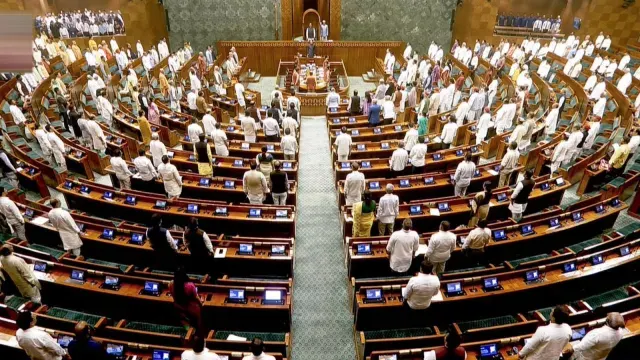
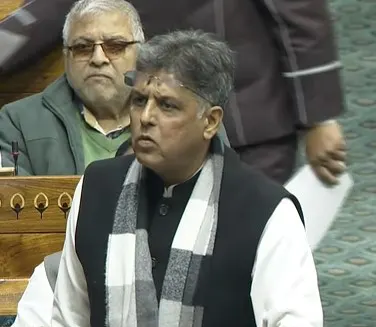
Congress leader Manish Tewari, initiating the discussion on electoral reforms in the Lok Sabha on Tuesday, said that the Election Commission does not have the legal authority to conduct collective and large-scale SSR. There is no such provision in the Representation of the People Act, 1950. He said that under this, if there is any discrepancy in the voter list in some areas of a constituency, the Election Commission has the right to conduct SSR there. The Commission can conduct SSR in a maximum of one entire constituency, but not simultaneously in an entire state or multiple states.
He said that today, when electoral reforms are being discussed, he wants to point out that the biggest electoral reform was made by former Prime Minister Rajiv Gandhi. During his tenure, the voting age was reduced from 21 to 18 years. The anti-defection law was also an important decision in the direction of electoral reforms, but later, it was also amended collectively.
The Congress leader said that reforms should be made in the process of appointment of commissioners in the Election Commission, and the selection committee should include the Prime Minister, a nominated minister, and the Leader of the Opposition in the Lok Sabha, as well as the Leader of the Opposition in the Rajya Sabha and the Chief Justice of the Supreme Court. This will maintain balance and ensure the appointment of election commissioners in a fair and transparent manner.
Mr. Tewari also raised questions about the 'one country, one election' system, saying that the Constituent Assembly was not in favor of this system. The Constituent Assembly considered this system and rejected it, considering it illogical and unfair.
He said that democracy runs on trust, and voters should be confident that their vote is going to the person they have voted for. Unfortunately, today, voters' trust in this has been shaken. When trust is broken, chaos spreads. In this context, he demands that if electronic voting machines (EVMs) are being used for voting, then 100% VVPAT arrangements should be made, and results should be announced only after counting. Alternatively, we should go back to voting through ballot papers. Japan, Germany, and several other countries have opted for the ballot paper system, abandoning the EVM system.
Mr. Tewari said that on the one hand, the Election Commission is consistently pushing for elections through EVMs, and on the other hand, it is not ready to provide a digitized voter list. What kind of digitization is this?
He said that there should also be a ban on transferring government funds to voters' accounts before elections, as this practice, if established, would mean that no state government would ever change. Before elections, Rs 20, 25, or 30 thousand would be deposited into voters' accounts, and a majority would be secured.
He said that winning elections and forming a government should not be the sole objective of political parties, but rather, they should strive to save the public system and leave a good country for future generations.
He emphasized that the process of appointing election commissioners should be changed, SSR should be banned, and strict arrangements should be made to prohibit the transfer of government funds to voters' accounts before elections.
Samajwadi Party leader Akhilesh Yadav, participating in the discussion on electoral reforms, said that the Election Commission, from which neutrality was expected, is nowhere to be seen. He said that when by-elections were being held in Rampur, Uttar Pradesh, we suspected rigging in the elections. On voting day, the police and administration were busy ensuring that voters did not come out of their homes. For the first time, the Bharatiya Janata Party won the Lok Sabha by-election from Rampur. Every incident was reported to the Election Commission, yet the Commission took no action against anyone. This made us realize that the Election Commission is not neutral.
He said that wherever the Bharatiya Janata Party created a communal atmosphere, the Samajwadi Party won. The institution responsible for conducting elections in a neutral manner is itself not neutral.
He said that a complaint was filed with the Election Commission regarding rigging in the Mainpuri by-election. However, electoral reforms are only possible when the Election Commission is neutral. He said that the method of appointing election commissioners should be changed, and transparency should be ensured. Elections should be held through ballot papers, as several questions are being raised about the electronic voting machine (EVM) technology. Even in the world, questions have been raised about EVM technology. In Germany, if voting is done through EVM, it would be considered illegal.
He said that the question also arises as to who created our electoral process. The electoral process has been corrupted from within, which is unfortunate. In several places in Uttar Pradesh, election results were changed. In Uttar Pradesh, by-elections were openly rigged.
He said that during elections, money is deposited into voters' accounts, which is wrong. This affects the elections. The role of the media needs to be seen in elections. The media should give equal space to everyone so that elections can be held in a transparent manner. The Bharatiya Janata Party runs negative campaigns on social media, and people's images are tarnished. Those in power receive the most electoral bonds. Where will the regional parties stand then?
Bharatiya Janata Party's Dr. Sanjay Jaiswal said that the opposition should introspect about its defeat in the Bihar Assembly elections. The opposition will never look at its weaknesses and will continue to level various allegations against the party that won the elections. The opposition's allegations of vote theft are baseless.
Dr. Jaiswal said that without counter-allegations, the Congress should activate its workers. He said that the real vote theft occurred during the Emergency, when the opposition was jailed. He said that the agreement between former Prime Minister Rajiv Gandhi and National Conference President Farooq Abdullah in 1987 was also a form of vote theft.
He said that the then-Chief Election Commissioner, T.N. Seshan, who made unusual electoral reforms, had his powers curtailed by the appointment of two other election commissioners, which was also a form of vote theft.
He said that there was a time when polling booths were looted for vote theft in Bihar, and re-polling had to be done in several constituencies. However, during the recent Bihar Assembly elections, re-polling was not required at any booth. During the SSR of the voter list in Bihar, 35 lakh votes were deleted, which included some who might have left their homes, some Bangladeshis, and some Rohingyas. He said that SSR should also be conducted in other states to remove Bangladeshis and Rohingyas from the country.
He claimed that in the upcoming West Bengal Assembly elections, the Bharatiya Janata Party will also secure a majority.
Dr. Jaiswal said that the Bharatiya Janata Party makes promises only after thorough preparation. He demanded that during elections, a ban should be imposed on unrelated promises made by political parties. Promises that cannot be fulfilled should not be made.