RSS decides to increase focus on youth and women

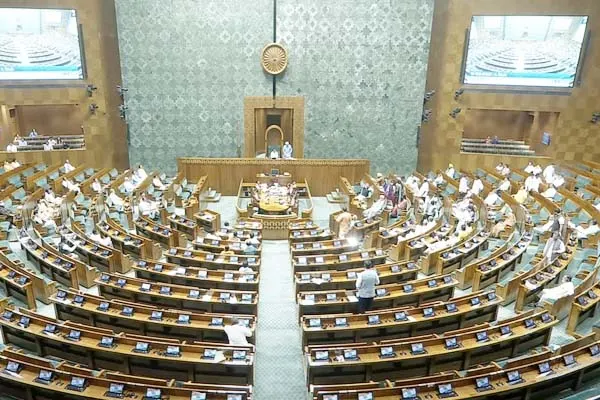
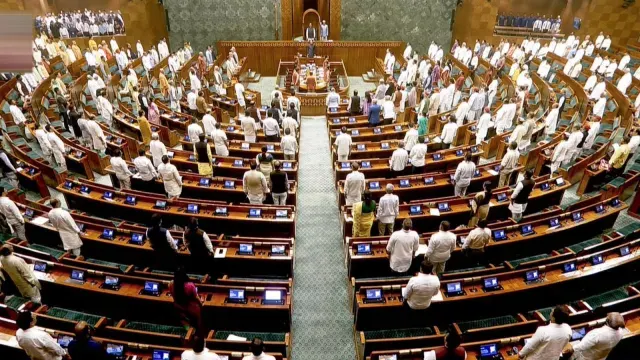
In the Lok Sabha, the opposition on Wednesday demanded that the Atomic Energy Amendment Bill, 2025, which covers crucial factors for the country's security and energy sector, should be brought to the House for discussion and approval only after being sent to a Joint Parliamentary Committee.
Before the debate on the bill began, Congress party's K C Venugopal said that a comprehensive discussion on the bill is required, so it should be sent to a Joint Parliamentary Committee or Standing Committee. He said that the bill, which has far-reaching implications for the nation, requires detailed discussion.
Speaker Om Birla said that he is ready to have a detailed discussion on the bill and any member who wants to express their views will be given an opportunity. Initiating the debate on the bill, Congress party's Manish Tewari said that the bill will prove to be a legislation that will open up the nuclear energy sector to the private sector.
Direct foreign investment of up to 49 percent to 100 percent will be allowed in the nuclear energy sector. He said that it may be a coincidence that just a few days ago, one of the country's largest industrial houses had expressed its intention to enter the nuclear energy sector and the government has introduced this bill.
Ruling party members objected to this, and Minister of State for Atomic Energy Jitendra Singh termed it baseless. Mr. Tewari said that the bill does not provide for any liability for suppliers of uranium and other materials in the event of an accident.
The related minister should clarify this. Autonomy should be given to the Nuclear Energy Regulatory Board. He said that the bill also does not clarify how the waste of a nuclear power plant will be disposed of.
He said that opening up nuclear energy to the private sector will not be conducive to clean and green energy. Mr. Tewari said that the bill has many more flaws and will create problems.
This bill should be discussed line by line before being brought here for discussion and approval. He demanded that the bill be sent to a Joint Parliamentary Committee.
BJP's Shashank Mani said that the approval of this bill will accelerate nuclear energy production. A developed India will need 100 gigawatts of electricity. This bill will prove to be a milestone in that direction.
Currently, nuclear energy production in the country is only two to three percent and it needs to be increased. He said that nuclear energy accounts for 65 percent of France's total energy production and 30 percent in the US.
In the US, 60 percent of the total nuclear energy is produced by the private sector. He said that it is necessary to bring private companies into this sector, as monopolies stifle innovation.
The introduction of technology, capital, and skill will accelerate the country's development. Mr. Mani said that the bill includes provisions that eliminate the risk of any security concerns.
Operator freedom will be ensured along with adherence to safety standards. Structural reforms have been made to resolve disputes. Efforts are underway to produce clean and cheap energy in the country.
He said that the draft of the bill was prepared after consultation with experts and has been introduced with a spirit of public welfare. An increase in nuclear energy production will prove beneficial for the betterment of every individual in the country.
Samajwadi Party's Aditiya Yadav opposed the bill, saying that it is being called the biggest reform in the nuclear energy sector, but it compromises public safety and rolls out the red carpet for foreign companies.
This bill is being used to bring in large companies from abroad and promise 100 percent FDI. What will happen to the government's Make in India program? Its purpose is to provide protection to nuclear suppliers.
The environmental damage caused by nuclear devastation has not been estimated. He asked whether the BJP has brought this bill to benefit the US. It is openly giving opportunities to American and French companies.
The government has introduced this bill to bring in the private sector. Trinamool Congress's Prof Sugata Roy opposed the bill, saying that it opens up the nuclear energy sector to private companies.
The government is planning to increase energy production. Nuclear energy is dangerous. The liability for an atomic accident has been fixed at Rs 300 crore, which should be increased to at least Rs 500 crore.
If you are bringing in foreign investment, then there is a fundamental issue because we do not have raw materials. This bill is being passed in haste, so it should be sent to a Select Committee.
Dravida Munnetra Kazhagam (DMK)'s Arun Nehru said that nuclear energy has nothing to do with peace; it is all exaggeration. The purpose of the private sector is to make a profit.
It is a matter of the government's dignity that it should protect itself and tell the world that we can do this work ourselves. We should tell the world that we are self-sufficient in the atomic sector.
In the last ten years, there has been a 10 percent increase in energy prices. He said that while it is a good thing that private companies are entering the field, we also have large government agencies.
Government companies should be given opportunities. The government should clarify how claims will be settled in the nuclear sector. The government's claims about increasing energy through this bill are not practical and pose significant risks.
Janata Dal (United)'s Dr Alok Kumar Suman said that this bill is a major initiative for the country's development. It will help the government ensure energy security and meet future energy needs.
The bill will utilize local nuclear resources to the fullest. By 2047, a four to five-fold increase in electricity demand is expected, so this bill will help increase energy consumption.
The government is moving forward to achieve many milestones in the nuclear energy sector. Telugu Desam Party's Krishna Prasad Teneti supported the bill, saying that its purpose is to make India a developed country.
Homi Jehangir Bhabha, the father of the Indian nuclear program, made nuclear energy an important means of development, and this objective is being taken forward. Homi Bhabha advocated for self-reliance in the nuclear sector.
Under the leadership of Prime Minister Narendra Modi, we are moving forward in that direction. He said that the nuclear energy sector needs investment, innovation, and efficiency, which this bill will achieve.
Many people are commenting, but we should move forward. This will ensure reliable energy for sixty years. It will provide employment to skilled people.
It will promote research, development, and innovation and create a scientific environment in the country. The entire responsibility of the nuclear supplier lies with the bill.
Nationalist Congress Party (Sharad Pawar faction)'s Supriya Sule said that "nuclear energy is our business, it has always been profitable. The government should clarify how monopolies will be prevented.
The government wants private companies to enter this sector, so how will research and development remain under government control?" She asked how the entry of foreign companies will promote this sector.
She said that the supplier's responsibility should be ensured. Shiv Sena's Arvind Sawant asked whether private companies are being brought into the atomic sector when India has achieved self-sufficiency.
In the event of a nuclear accident, it is being said that compensation will be based on size, so how will that be determined? The provisions regarding accountability are also not in the public interest.
A limit has been set for compensation, which is not appropriate. Shiv Sena (UBT)'s Arvind Sawant said that the biggest issue is safety, and the government should explain how it will ensure that private sector operators adopt safety measures like government plants.
He said that the issue of the reactor is important and needs to be resolved from all aspects. While the idea of giving it to the private sector seems good, it is a major safety issue and needs to be referred to the JPC to build consensus.
Congress's Shashi Tharoor said that the Nuclear Energy Bill is full of flaws and needs to be sent to a Joint Parliamentary Committee immediately to rectify those flaws.
It has been stated that atomic energy is clean, but the language used in this regard is misleading. It is clear that nuclear energy is neither clean nor sustainable, so the government needs to understand that it should not compromise on the issue of giving control of its operations to the private sector by relying on misleading language.
Radiological safety concerns cannot be taken lightly. He said that the bill is not safe from a safety point of view. Nuclear plant workers cannot be treated like those working in other factories.
The bill lacks safety measures for climate change, so he suggested that it be sent to the JPC for comprehensive discussion. BJP's Shankar Lalwani said that the use of nuclear energy is being done in every field today, and this plant will prove to be very useful for meeting the energy needs of the future.
He said that a comprehensive strategy was adopted while drafting the bill, and it was introduced only after considering all safety measures and getting approval from the Atomic Energy Commission and various ministries.
It establishes accountability for the number of megawatts of private sector investment capacity and that the emergence of private investors will make India capable of self-sufficiency in the energy sector.
Shiv Sena's Dhairyashil Sambhaji Raut said that the country is taking a big leap with this bill as an initiative to rapidly achieve self-sufficiency in the energy sector has begun.
Recalling former Prime Minister Atal Bihari Vajpayee in the context of nuclear energy, he said that this bill is working to fulfill Mr. Vajpayee's dream. Many members present