Ram Mandar gold theft case: Jai Ram Ramesh demands Supreme Court-supervised inquiry, accuses BJP of shielding influential individuals

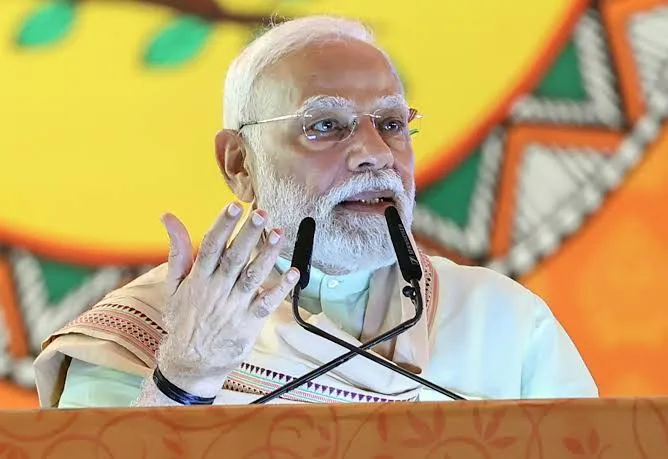
The Prime Minister said that the metro network in Maharashtra has also expanded rapidly. In 2014, only 101 km of metro line was operational in the state, whereas today services run on about 200 km of metro line. More than 680 km of metro lines are under work in the state. Over two and a half lakh crore rupees are being invested in Maharashtra's metro infrastructure
Prime Minister Narendra Modi inaugurated and laid the foundation stone for projects worth approximately 21,800 crore rupees for the Pune Metro via video conferencing on Tuesday. Among them he inaugurated the pink line of the Pune Metro, about 23 km long, built at a cost of over 8,300 crore rupees, and laid the foundation for the second phase comprising four metro lines estimated at about 13,500 crore rupees.
At the event the Prime Minister said that the Pune Metro expansion will give new momentum to the city's development and make people's lives easier. Festive joys increase further when a new facility is added to life. Today it is a similarly joyous occasion for the people of Pune. He congratulated the people of Pune and Maharashtra for these projects.
Modi said that about ten years ago he had the opportunity to lay the foundation stone for the first phase of the Pune Metro. Now, with metro connectivity established between Hinjewadi and Shivaji Nagar, the major information technology (IT) hub of Pune will have better inbound and outbound facilities. Moreover, the new lines whose foundations were laid today will further strengthen the link between the old and new areas of the city.
He said that Pune has always been a centre of ideas that have given the nation and society a new direction. Today the city is also steering India's new energy. In sectors such as IT, automobile, pharma, start‑ups, innovation and manufacturing, Pune is the land of dreams and determination for the country's youth. Improved metro connectivity will give new momentum to the city's development.
The Prime Minister said that today a city's identity is not only defined by its industries or food items, but also by how competitive it is and how easy life is for its people. Metro projects improve the city on both these parameters. The Pune Metro expansion will save people's time and provide better travel facilities. When people's time is saved, productivity rises, giving momentum to the national economy and benefiting both poor and middle‑class sections.
Modi said that the country's first metro service started in 1984, but in the subsequent 30 years only 248 km of metro line could be built. By 2014, metro service was available in just five cities of the country. He said that if the old mindset and way of working had continued, it would have taken many more decades for the metro to reach Pune.
He said that after the National Democratic Alliance (NDA) government came to power in 2014, a commitment was made to make life easier for the middle class living in cities and to improve transport facilities. In the past 12 years, the country's metro network has expanded rapidly. In 2014, the metro network was only 248 km, whereas now it has grown to about 1,200 km. Earlier metro ran in only five cities, while today metro service is available in 26 cities of the country. More than one crore people travel by metro daily and the Indian metro network has become one of the three largest metro networks in the world.
The Prime Minister said that the metro network has also expanded rapidly in Maharashtra. In 2014, only 101 kilometres of metro line were in operation in the state, whereas today services run on about 200 kilometres of metro line. More than 680 kilometres of long metro lines are under work in the state. Over two and a half lakh crore rupees are being invested in metro infrastructure in Maharashtra. This is creating employment opportunities for labourers, engineers, shops and factories. He said that the Pune metro project also holds special significance because it is being built under a public‑private partnership (PPP). It is an example of joint efforts by the government and the private sector. The success of this model can give further momentum to the country's development.
Modi said that every citizen and youth of the country is fully engaged with confidence in building Vikas Bharat. In the past 12 years, work has been done on numerous infrastructure projects in the country, including rural roads, national highways, expressways, railway electrification, tunnels and bridges. In the coming years, India will devote its energies to making its cities among the best cities in the world.
admin