
National
 National
 National
 National
Ramadan's Delights: A Captivating Scene of Faith, Brotherhood, and Civilization in Mumbai's Suburbs
Awaze Bihar4 min read
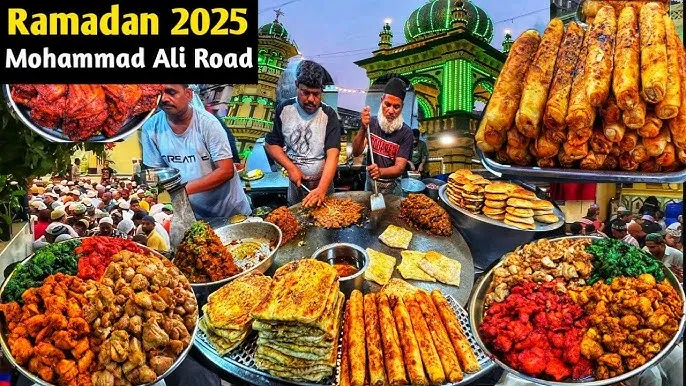
Mumbai is known worldwide for its fast-paced life, multicultural identity, and religious harmony, but as the month of Ramadan arrives, the atmosphere of the city changes completely. A soul-stirring scene of worship, recitation, Tarawih, Iftar, and charity unfolds, revealing the true spirit of Mumbai. Over the past two decades, the prominent festivities of Ramadan have been more visible in the suburban Muslim-majority areas of the peninsula, where mosques and markets are bustling with activity.
The peninsula, considered the original part of the city, spans approximately 15 kilometers from Colaba to Mahim and Colaba to Sion in the south. However, after Bandra and Sion, the western and eastern suburbs begin, where a large number of Muslim populations reside, and the festivities of Ramadan are visible in all their glory.
Bandra West is considered an affluent area, but several of its areas have a large Muslim population. From Bandra station to SV Road and around the Bandra Best Depot, the densely populated Muslim area of Jamaat-e-Jamhuria stretches up to Bandra Talab in the north. During Ramadan, the mosques and streets of areas like Behrampada, Garib Nagar, Khwaja Garib Nawaz Nagar, Kher Nagar, and Bandra Court are filled with worshippers.
In the slums and SRA buildings, home-based factories for ready-made clothes, embroidery, and daily necessities operate. Laborers from UP, Bihar, and Bengal, after a day of hard work, participate in collective Iftar gatherings, presenting a beautiful scene of brotherhood.
Areas like Carter Road, Hill Road, Bandstand, and Pali Hill are the identity of Bandra West. The Anjuman-e-Islam Muhammad Isaq Jamkhana Girls High School and Junior College on SV Road has thousands of students enrolled. The Bandra market has a majority of the Qassab community, and the historic Jama Masjid is located opposite it, managed by the Bakar Qassab Jamaat Trust. The presence of 2,000 to 2,500 worshippers during Friday prayers indicates its importance.
There was a tradition of special Iftar and literary gatherings at Lucky Hotel, which stopped after the demise of Professor Zidi. The Rezvi College and Rezvi Education Complex on Carter Road are providing educational services. Akhtar Rezvi's responsibility has been taken over by his wife, Rubina Rezvi. The Pali Hill area has residences of prominent film personalities.
In the slums and SRA buildings, home-based factories for ready-made clothes, embroidery, and daily necessities operate. Laborers from UP, Bihar, and Bengal, after a day of hard work, participate in collective Iftar gatherings, presenting a beautiful scene of brotherhood.
The Pali village has the sons of late social leader Babu Qureshi, Advocate Khaled Babu Qureshi (former member of the Maharashtra Waqf Board), and Imran Babu Qureshi, who are active in social and educational fields. Asif Farooqui, a senior Congress leader associated with the IT industry, also resides in the area and has been a member of the AMU and Jamia Millia Senate.
The mosque in his office premises offers five daily prayers, and special Iftar arrangements are made during Ramadan. On the highway from Bandra to Santacruz, the beautiful mosque of Juhu Garden is located, with a graveyard behind it, where Dilip Kumar, renowned poet Majrooh Sultanpuri, Ali Sardar Jafri, singer Mohammed Rafi, and other notable artists are buried.
The Arla mosque and its associated madrasa provide religious education to students every year. The Iftar and Eid gatherings organized by the late Sami Khatib, owner of Medike Medical Company and former president of the Anjuman-e-Islam, were a shining example of communal harmony.
In the Andheri station road mosque, local shopkeepers and vendors have made arrangements for prayers. The Noor Mosque in Dongri village is an ancient mosque, and its surroundings become bustling during Ramadan. Former corporator Mohsin Haider and his wife, who was elected from a women's reserved seat, arrange Iftar and Sehri for the needy.
In Jogeshwari, a large number of Memon and Chilliya Muslim communities reside. The Allah Wali Mosque and Madni Mosque (Tablighi Jamaat center) are filled with worshippers during Ramadan. Sahastraroad, Momin Nagar, and Behrampada have seen rapid development and an increase in population.
The Chilliya Muslim community's hotels prepare special dishes for Iftar and Sehri, which have become a part of the area's cultural identity. From Jogeshwari to Goregaon Oshiwara bridge, the Muslim population is spread out, where the affluent and underprivileged classes benefit from the blessings of Ramadan together.
The large number of air-conditioned mosques is also a notable feature of this area. In Mumbai's suburbs, Ramadan is not just a month of worship but a practical expression of service, generosity, and brotherhood. Whether it's the showrooms of Muslim traders on Bandra Linking Road or the street vendors on the footpath, everyone comes together to arrange Iftar.
After the Asr prayer, the tables are set, where the fasting and the passersby participate without any distinction. These scenes are proof that even in Mumbai's busiest life, spirituality takes precedence during Ramadan. The mosques, madrasas, markets, and streets of the suburbs spread the message of faith, unity, and humanity during this sacred month. This is the spirit that makes Mumbai not just a metropolis but a living example of cultural harmony.
Related News
RSS decides to increase focus on youth and women
Awaz E Bihar
Government hiding truth on clash with China in Arunachal, country should be given full information: Kharge
Awaz E Bihar
Efforts to take the opposition into confidence regarding the women's reservation and delimitation bills
Awaz E Bihar