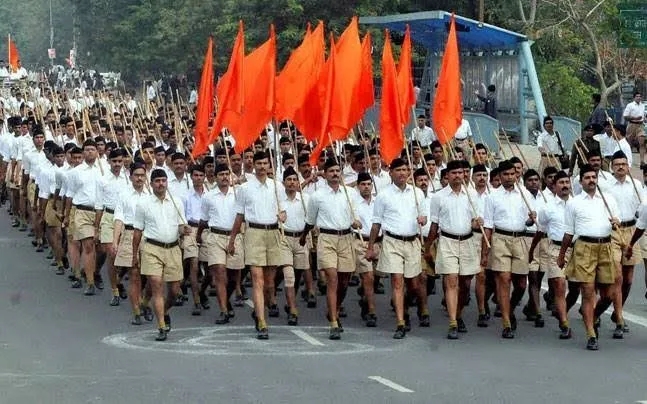
RSS decides to increase focus on youth and women

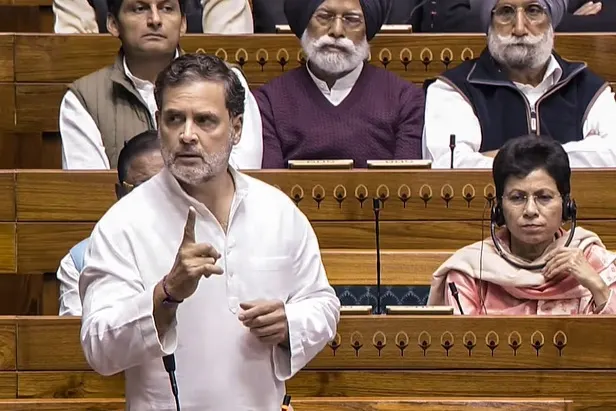
After facing a strong reaction from BJP leader Amit Shah over his speech in the Lok Sabha on "vote theft" allegations, Congress leader Rahul Gandhi said on Thursday that Shah "was under a lot of mental pressure and did not answer my questions about the allegations of vote theft during the elections."
Speaking to media representatives outside Parliament on Thursday, Mr. Rahul Gandhi said, "(Amit Shah) used unacceptable language, his hands were shaking, you must have seen... he was under a lot of mental pressure, it was visible in Parliament yesterday, the whole country saw it."
And he did not say anything about what I said, he did not provide any evidence, I directly challenged him, asked him to come out openly in a press conference, let's discuss it in Parliament, but there was no response... you all know what the truth is.
A day earlier, while speaking in the Lok Sabha on electoral reforms, Mr. Gandhi, who is also the leader of the opposition, accused the current government of "vote theft", which he considers "the biggest betrayal". He also accused the government of not being transparent about EVMs and VVPATs and said that the Chief Election Commissioner (CEC) has been given unnecessary exemptions.
Explaining the government's stance on VVPAT, Mr. Shah accused the opposition of spreading "lies" and misleading the country with one-sided lies.
How can the country be considered safe if the Prime Minister and Chief Ministers are elected through loopholes? He asked, "Can loopholes decide democracy?" He said that VVPAT will remove all foreign citizens from the electoral rolls.
Shah also warned that VVPAT comes under the jurisdiction of the Election Commission under Article 326 and Parliament cannot discuss it.
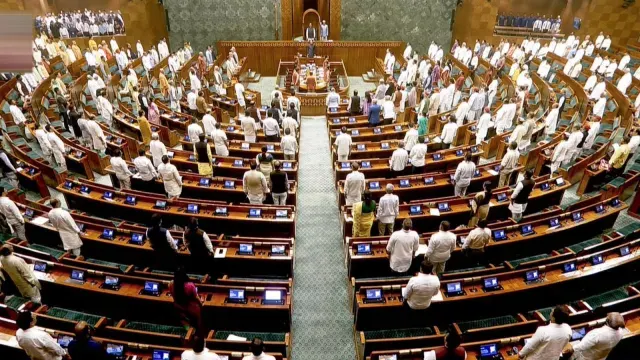
On the occasion of the completion of 150 years of the song 'Vande Mataram', which played a role in infusing enthusiasm in the freedom struggle, created by Bankim Chandra Chatterjee, a three-day discussion in the Rajya Sabha concluded with the appeal of the House leader and BJP President JP Nadda that this song should be given a place equivalent to the national anthem.
At the end of the discussion, Mr. Nadda said that on the occasion of the completion of 150 years of Vande Mataram, we should pledge that it will be given a place equivalent to the national anthem and will get equal respect. In his nearly one-hour-long speech, he said, "We fully respect 'Jana Gana Mana' and are ready to sacrifice our lives for its respect, but due to Pandit Jawaharlal Nehru, Vande Mataram did not get the respect and place it deserved." More than 80 members participated in the discussion.
BJP President and Union Minister Mr. Nadda said that under pressure from communal forces, the Congress passed a resolution in its working committee in October 1937 to adopt and sing a shortened version of Vande Mataram, and the decision on the national anthem was made in the Constituent Assembly in just nine minutes without discussion. He said that words like Mother India and Bharat Mata are not from the RSS or the BJP, but from our cultural heritage, but the Congress has compromised on these words.
During Mr. Nadda's statement, Congress's Mallikarjun Kharge and Jairam Ramesh tried to intervene several times and opposition members continued to create a ruckus. The BJP leader referred to the Kamal Nath government's decision to discontinue the traditional singing of Vande Mataram on the first day of the assembly session in Madhya Pradesh and a video of the Chief Minister of Karnataka, in which he is telling his party workers that singing Vande Mataram is not mandatory. He said that "these are the habits of the Congress, which are 100 years old, and that's why Prime Minister Narendra Modi has called the Congress the 'Muslim League Mawovadi Congress Party'."
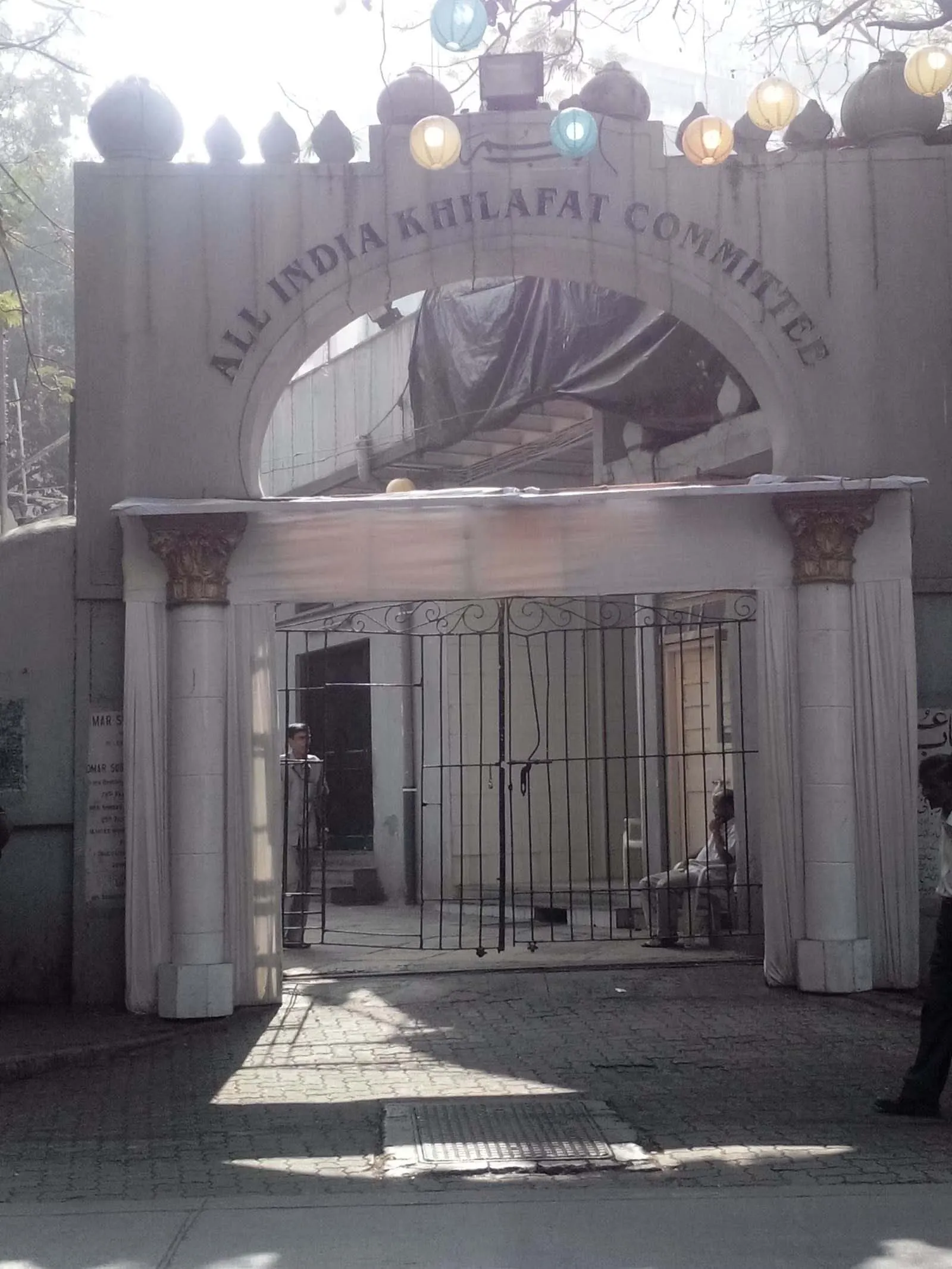
In the same sequence, he mentioned the Congress's acceptance of the British government's discriminatory Waqf Act in 1913, the division of the Bombay Presidency under the pressure of the Muslim League in Sindh state, the shortening of Vande Mataram under the pressure of Muhammad Ali Jinnah's Muslim League, the acceptance of the division of India according to Jinnah's thinking in 1947, and the division of Kashmir after the tribal invasion and the inclusion of Article 370.
Mr. Nadda also said that in 1971, the law that was made to punish the insult of the national anthem, national flag, and national symbols, does not include any provision for the insult of the national song.
He said that our fight with the Congress is not about land division, but about ideology. I repeat that we are ready to sacrifice our lives for the respect of 'Jana Gana Mana'. But no country runs on compromises, but on truth and history. It runs on national sentiments and patriotism.
Mr. Nadda also responded to the claim of Congress members that the decision to adopt a shortened version of Vande Mataram in the Congress Working Committee was taken with the opinion of Subhas Chandra Bose. He said that if the Congress wants to give credit to Nehru ji for everything, then Netaji Subhas Chandra Bose and Gurudev Rabindranath Tagore should not be made scapegoats for the mistakes.
He said that Nehru ji had termed the idea of making Vande Mataram the national anthem as outdated in 1937. He considered it conservative thinking in terms of the sentiment of a modern nation.