
PM Modi embraces Nishant Kumar, touches his feet to seek blessings

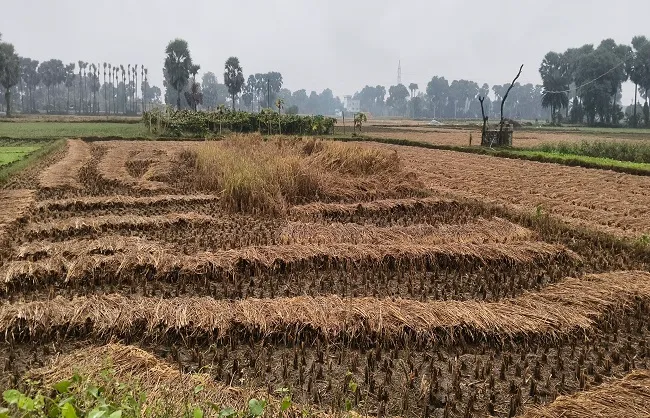
Immediate arrangements are needed to drain excess water accumulating in fields where harvested crops are lying or paddy is still standing. It has also been advised to halt the harvesting of standing crops until the weather clears completely and the sun comes out.
Bhagalpur, November 21 (ABN). Unseasonal rains have increased the difficulties of farmers in Bhagalpur district. The rain, which started from Saturday morning, during the peak season for rabi sowing and paddy harvesting, has left farmers fearing damage to their ready crops. In most parts of the district, paddy harvesting is complete, and the crop has been left in the fields to dry or collected in threshing floors. In such a situation, the sudden rain has put the farmers' hard work at risk. In some low-lying areas of the district and fields where paddy was sown late, the crop is still standing. The intermittent rain since morning has increased the fear of damage to the ready crop lying under the open sky. Farmers in various blocks, including Kehlgaon, Peerpenti, Sabour, Nathnagar, Shahkand, Sultan Ganj, and Nougachhia, are quite worried about the sudden change in weather. Farmers say that after hard work, expensive fertilizers, and irrigation, there was a good paddy yield this year, but the rain just before the threshing of the harvested paddy has dashed their hopes. In the fields where farmers had left the cut crop, the paddy bundles have been soaked due to water accumulation. Meanwhile, it was not possible to cover the paddy kept in threshing floors with tarpaulin or plastic in time, creating a risk of increased moisture in the crop. According to agricultural experts and local farmers, rain at this stage can damage paddy in several ways. If the harvested crop remains in water or high moisture for two to three days, the grains may start sprouting in the ears. There is also a fear that paddy grains may turn black after being soaked in rain. This will not only affect the quality of rice but may also cause farmers difficulty in getting a fair price in the market and at government procurement centers. Experts say that heat generated in soaked paddy heaps in threshing floors increases the risk of fungal infection and rotting of straw. This could also create a fodder problem for livestock. On the other hand, rain accompanied by strong winds can knock down the standing ripe crop in the fields, which may increase harvesting costs and reduce yield due to grain shedding. Experts from Bihar Agricultural University, Sabour, and Krishi Vigyan Kendra have declared the current weather unsuitable for paddy harvesting and threshing. According to experts, the excess moisture in the crop can directly affect the quality of paddy. They have advised farmers to take immediate precautionary measures to avoid damage. Experts have said that the paddy bundles kept in threshing floors should be properly covered with thick plastic sheets or tarpaulin. Care should also be taken to ensure that rainwater from below does not reach the paddy heaps. For this, it would be better to keep the paddy bundles on a high ground or on a thick layer of straw.
Immediate arrangements are needed to drain excess water accumulating in fields where harvested crops are lying or paddy is still standing. It has also been advised to halt the harvesting of standing crops until the weather clears completely and the sun comes out. As soon as the rain stops and the sun comes out, the soaked paddy bundles should be opened and spread out so that moisture can be reduced by air and sun, and the grains can be saved from sprouting or turning black.
In addition, after the harvest, it has been instructed not to pack the rice in bags until the moisture content in the grains reaches approximately 12 to 14 percent. Meanwhile, farmers’ associations in the district have demanded that the administration and the Department of Agriculture conduct an immediate assessment of crop losses in the affected blocks after the rains cease. They also request that affected farmers be provided with adequate compensation and that the government’s purchase of rice through the PEX scheme be granted some relaxation in the prescribed moisture standards, so that farmers are not forced to sell their produce to traders and middlemen at low prices.
admin