At least 11 killed, over 150 hospitalised after consuming allegedly toxic alcohol in Manipur

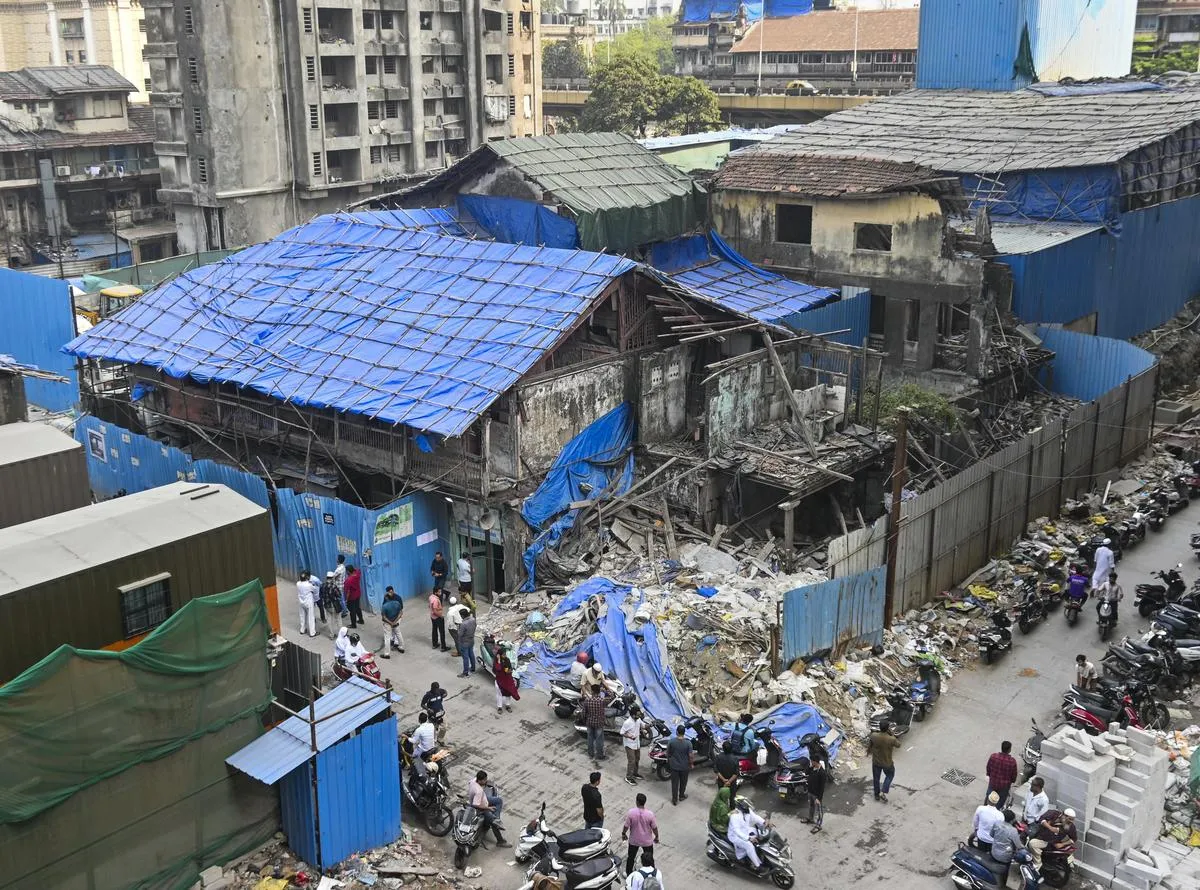
The issue of relocating the mosque located on the ground floor of the haveli had emerged as a major obstacle in the demolition operation. Despite most parts of the building being vacated, differences had arisen between locals and concerned officials regarding the use of the prayer hall and arrangements for an alternative location.
The demolition of the 162-year-old historic Haji Ismail Haji Habib Haveli, located in the Bhendi Bazaar area of South Mumbai, was initiated on Thursday by the Brihanmumbai Municipal Corporation (BMC). The building has historically been linked to fugitive underworld don Dawood Ibrahim, which had given it considerable notoriety in the past. A large number of police personnel and municipal corporation officials were deployed in the area during the demolition operation. Heavy police arrangements were made to ensure that the operation is completed in a peaceful environment and no unpleasant situation arises. BMC officials were present on the ground to supervise the demolition, while police personnel were deployed around the building and adjacent roads to maintain law and order as well as manage traffic. This operation holds unusual significance in the context of the building's dilapidated condition, its historical status, and the broader redevelopment plan for Bhendi Bazaar. The BMC and MahaRERA had classified the said building under Category C-1, declaring it extremely dangerous and uninhabitable. Buildings in this category are considered a threat to human life and require immediate demolition.
Munipal officials said that due to the dilapidated condition of the building, the safety of people present there, those coming for worship, and passersby was at risk. On this basis, a notice had been issued to vacate the building and carry out the demolition operation. This operation is being carried out under Section 354 of the Mumbai Municipal Corporation Act 1888 and in the context of legal proceedings related to the order of the Bombay High Court dated August 31, 2020. The issue of relocating the mosque located on the ground floor of the haveli had emerged as a major obstacle in the demolition operation. Despite most parts of the building being vacated, differences had arisen between locals and concerned officials regarding the use of the prayer hall and arrangements for an alternative location.
The Safe Bihari Upliftment Trust (SBUT), which is implementing the Bhendi Bazaar Cluster Redevelopment Project, had offered to provide an alternative location in Al-Nasr Tower in Sector 4 for prayers. In addition, an alternative of financial assistance for rent was also offered. However, the demand of those associated with the mosque and local residents was that a permanent place of worship facility be provided at the same location after redevelopment. Local MLA Amin Patel had also intervened in this matter, raising questions regarding legal obstacles and court orders. Due to these objections and legal matters, the demolition operation could not start on Wednesday, but on Thursday, the BMC initiated the operation amidst strict police arrangements.
The Haji Ismail Haji Habib Haveli, built in 1864, was established primarily for the temporary accommodation of pilgrims coming to Mumbai for Hajj and other travelers. The building provided accommodation facilities to travelers for several decades. Later, residential rooms, shops, and commercial activities also began in its various parts.
The building gained further notoriety when the family of Dawood Ibrahim resided here. Dawood's father, Ibrahim Kaskar, was a constable in the Mumbai Police, and his family was residing in this haveli on Pakmodia Street.
In that area, Daud Ibrahim spent his early life and later emerged as a prominent name in Mumbai’s underworld. The company associated with his name gained notoriety in the years that followed for its activities in domestic and international crime. This building has also been mentioned in several accounts of Mumbai’s underworld history and in references to Daud Ibrahim’s early period. It has been featured in numerous Hindi films, with footage shown in them.
Daud Ibrahim fled India in 1986 and is listed among the country’s most wanted fugitives.
Haji Ismail Haji Habib Musafir Khana Bhandi Bazaar is part of the larger cluster redevelopment project of Bhandi Bazaar, which is being implemented by the Sufi Barhani Appulftment Trust. The primary goal of the project is to replace the area’s old and dilapidated buildings with modern residential and commercial structures, widen the roads, and improve basic urban facilities. According to information, a portion of Musafir Khana was also within the scope of the proposed internal road expansion, which led to the decision that the building should be demolished for the development plan. Bhandi Bazaar is considered one of Mumbai’s old and densely populated areas, where narrow lanes, old buildings, limited urban facilities, and population pressure have long been major problems. In this context, the redevelopment of the area is being viewed as an important project for improving urban infrastructure.
The collapse of the 162‑year‑old Musafir Khana is not only a significant step in the reconstruction of Bhandi Bazaar but also a part of Mumbai’s historical, social, and underworld‑connected past stories.
admin