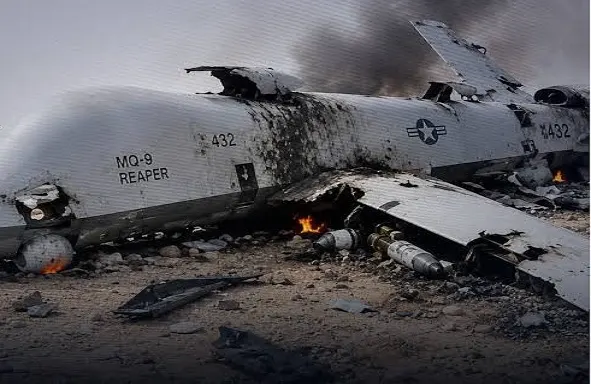
Iran claims, US 58th MQ-9 Reaper drone shot down over Strait of Hormuz
According to Israeli media reports, no significant progress was made in these talks. 'Kan' reported that the negotiations held so far have been limited to general principles and have not provided any specific help in resolving the fundamental differences hindering the formation of the government.
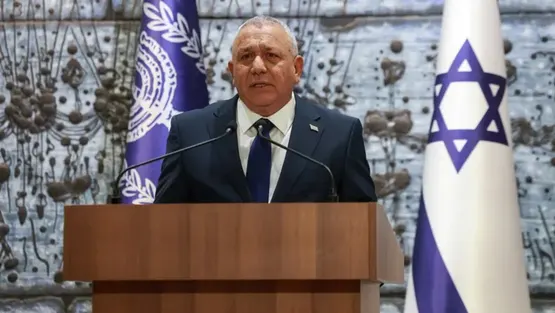
According to Israeli media reports, Yashar Party leader Gadi Aizencot is preparing to announce that he has found a way to form the next government in Israel, even though talks with Prime Minister Benjamin Netanyahu's Likud party on key political issues remain stalled.
According to 'Kan News', Mr. Aizencot could announce a possible agreement, which could pave the way for the proposed coalition to be presented to the Israeli parliament (Knesset) for a vote of confidence within days. Aizencot has been in consultations with Likud, far-right parties, and Arab political groups to secure the parliamentary majority needed to form a government following the elections for the 26th Knesset held on October 27.
Israeli media reports that talks between Likud and representatives of Mr. Aizencot's Yashar party have not yet reached a final agreement. Differences remain between the two sides over who will lead the government and whether right-wing National Security Minister Itamar Ben Gvir will be included in the coalition.
The latest round of talks between the two parties was held on Sunday at a hotel in Herzliya, where several contentious issues were discussed, including the establishment of a state investigative commission and the repeal of judicial reforms. Aizencot's office told the 'Jerusalem Post' that no agreement on the rotation of the Prime Minister's term was discussed in this meeting.
In a joint statement released after the negotiations, Likud and Yashar said that both sides had presented their positions on several key issues and engaged in detailed discussions. They also agreed to hold another meeting, although the date has not been announced. According to Israeli media reports, no significant progress was made in these talks. 'Kan' reported that the negotiations held so far have been limited to general principles and have not provided any specific help in resolving the fundamental differences hindering the formation of the government. The daily 'Yedioth Ahronoth' reported that the Likud party wants to keep Itamar Ben Gvir in the government, while Aizencot's party is adamant on keeping him out of the coalition.
Along with this, the official emphasized that Israel does not consider a first strike by Iran to be impossible. These details emerged at a time when US Vice President JD Vance and Secretary of State Marco Rubio met separately with the Prime Minister of Qatar on Tuesday. Qatar has played a key role in efforts to resume stalled talks to end the conflict. According to an informed source, Vance held talks with Qatari Prime Minister Sheikh Mohammed bin Abdulrahman bin Jassim Al Thani at the White House. The office of the US Vice President did not issue any response or comment on the matter. This Israeli stance comes at a time when Gadi Aizencot, who has been entrusted with the responsibility of forming a new Israeli government, said yesterday that he does not consider immediate military action against Iran necessary. This position is contrary to the statements of outgoing Prime Minister Benjamin Netanyahu, who had warned against downplaying the importance of serious threats. Netanyahu, in an address to the parliament (Knesset) in Jerusalem, where he called for unity during Aizencot's efforts to form a new government, said: Anyone who downplays or diminishes the importance of the direct, serious, and heavy threats surrounding us does so for political reasons.
For several weeks, Netun Yahou has been pressuring the Donald Trump administration to restart the war. Trump recently declared a return to war as impossible, yet kept the military option alive. He hinted that large-scale military operations could resume after the new year (2027).
It should be noted that the Iranian side had presented a revised proposal consisting of 7 demands in exchange for opening the Hormuz waterway within two days, through intermediaries.
These demands included ending the US blockade of Iranian ports, lifting sanctions, restoring frozen Iranian assets abroad, ceasing hostilities on all fronts, withdrawing US forces from the vicinity of Iran, and agreeing on the management of the waterway. However, Washington rejected it, and the US president had already deemed it unacceptable.
admin