
National
 National
 National
 National
Allahabad High Court gets five ad-hoc judges, Supreme Court Collegium approves
Awaze Bihar3 min read
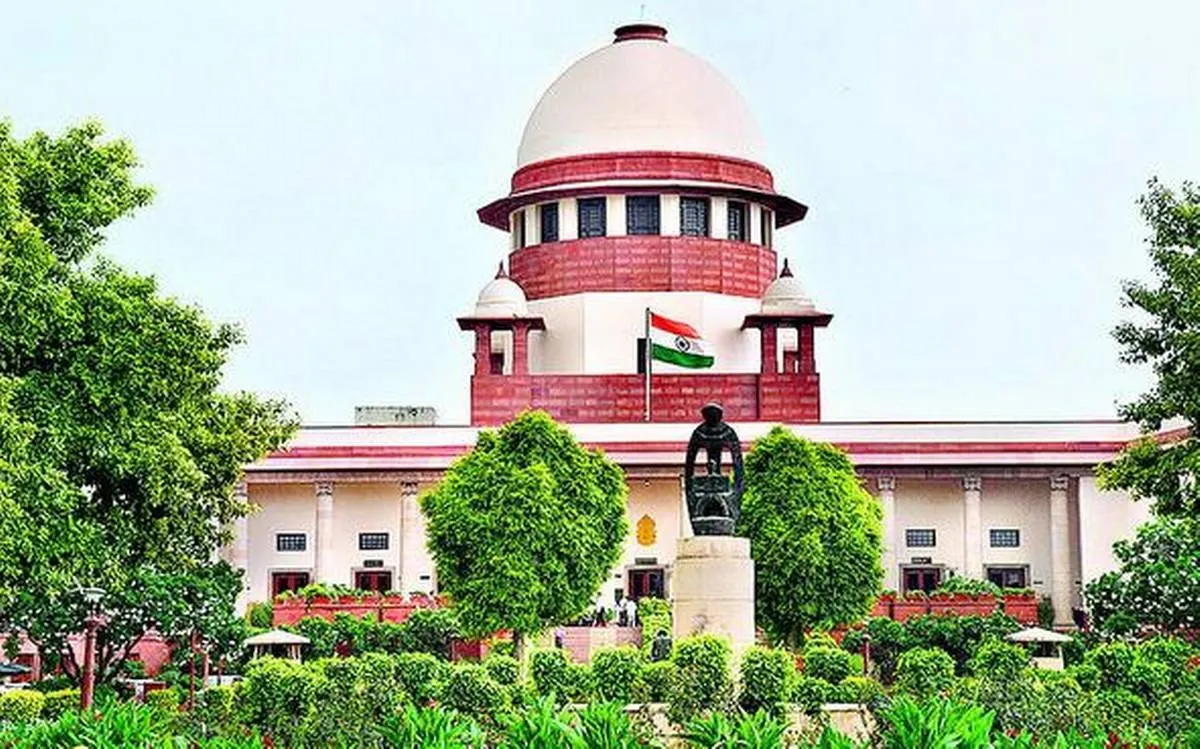
The Supreme Court Collegium on Tuesday approved the reappointment of five retired judges of the Allahabad High Court as ad-hoc judges for a period of two years, invoking Article 224A of the Constitution. The move comes in the wake of a large number of pending criminal cases. The Collegium, comprising Chief Justice Surya Kant, Justice Vikram Nath, and Justice J.K. Maheshwari, approved the appointment of Justices Mohammad Faiz Alam Khan, Mohammad Aslam, Syed Aftab Hussain Rizvi, Renu Agarwal, and Jyotsna Sharma as ad-hoc judges of the Allahabad High Court.
With these appointments, the number of judges in the Allahabad High Court will increase to 115, still short of the sanctioned strength of 160 judges. It is hoped that these appointments will help in disposing of pending criminal cases. The Constitution provides that the Chief Justice of a High Court, with the prior approval of the President, can appoint retired judges as ad-hoc judges in cases of a large number of pending cases or a shortage of judges. However, such appointments have been rare under Article 224A.
Earlier, the Supreme Court had made such appointments only three times - in 1972, Justice Suraj Bhan was appointed to the Madhya Pradesh High Court; in 1982, Justice P. Venugopal was appointed to the Madras High Court; and in 2007, Justice O.P. Shrivastava was appointed to the Allahabad High Court. The Supreme Court, in a 2021 judgment, had advocated for the reuse of this 'dormant constitutional provision' as an effective way to address the large number of pending cases in High Courts.
According to sources, Chief Justice Surya Kant initiated the current process when he found that High Courts were not following the Supreme Court's guidelines on the use of Article 224A. Letters were then sent to all High Court Chief Justices to solicit recommendations for ad-hoc judges. So far, recommendations have been received from three High Courts, with the Allahabad High Court's recommendation being approved. The Collegium is expected to meet again to consider the remaining recommendations, while other High Courts are still in the process of sending their proposals.
Last year, in December, a bench headed by Chief Justice Surya Kant clarified the 2021 judgment and gave more flexibility to High Court Chief Justices in appointing ad-hoc judges. Earlier, in January 2025, a three-judge bench had relaxed the conditions for appointing ad-hoc judges, allowing such appointments even when the vacancy was less than 20%. However, the 2021 judgment had reiterated that Article 224A should be invoked only when steps to fill permanent judicial vacancies had been taken. According to sources, the five ad-hoc judges appointed to the Allahabad High Court were specifically chosen to help dispose of long-pending criminal appeals, bail matters, and cases related to personal liberty.
The process of appointing ad-hoc judges is relatively faster since these judges have already served on the bench. The High Court Collegium reviews their past judgments and, unlike new appointments, does not usually require confidential information unless there is a serious complaint.
Related News
RSS decides to increase focus on youth and women
Awaz E Bihar
Government hiding truth on clash with China in Arunachal, country should be given full information: Kharge
Awaz E Bihar
Efforts to take the opposition into confidence regarding the women's reservation and delimitation bills
Awaz E Bihar