Attack on Indian-flagged cargo ship near Oman, one crew member killed



The action in Dhubri is also being viewed in the context of the wider eviction drive ongoing in Assam. Reports had emerged about two weeks ago that over 1,100 Muslim families were evicted during a two-day operation in the state's Nagaon, Hojai and Goalpara districts. According to Scroll's report based on data from the state Department of Revenue and Disaster Management and district officials, approximately 19,000 families have been evicted from government land in Assam over the past decade.
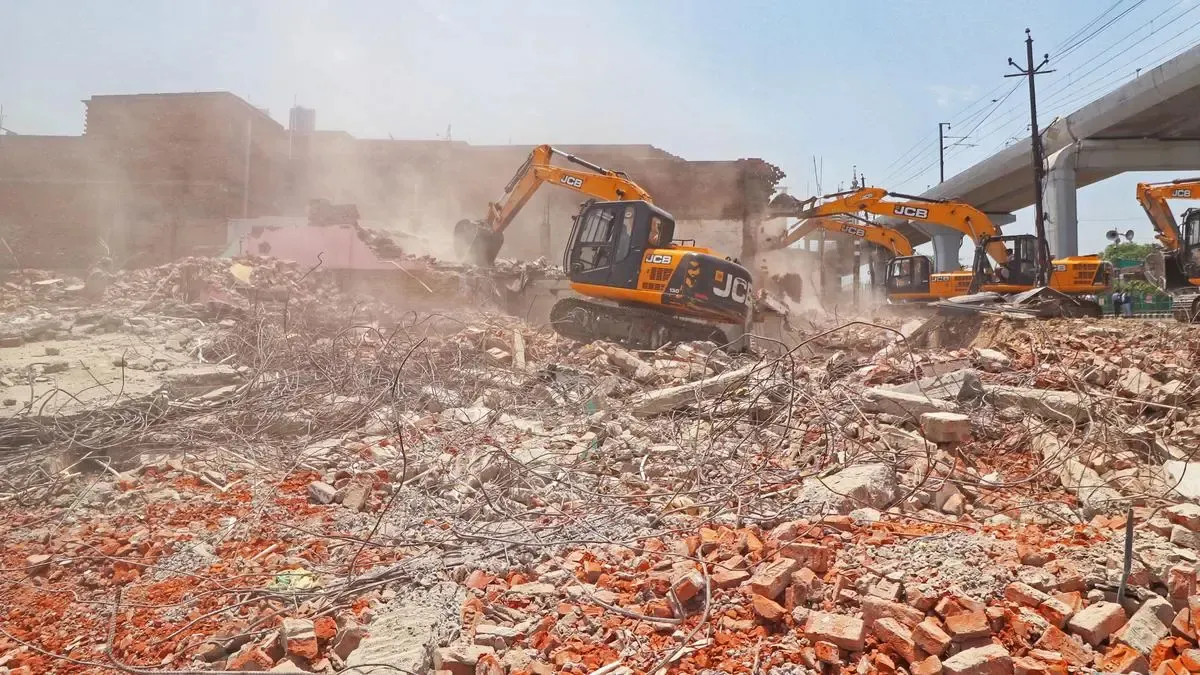
Guwahati/Dhubri, November 3: Amid eviction operations in Assam, the administration launched a large-scale demolition drive on November 1 in Alamganj, a Muslim-majority area in Dhubri district. As a result, the houses of over 640 Bengali-origin Muslim families were demolished, and more than 4,000 people were left homeless. Severe unrest and anxiety have been seen in the area after hundreds of families lost their roofs. The affected families include women, children, the elderly, and individuals who claim to have resided in the area for several decades. The operation was carried out in Alamganj Part-IX under the Goripur Revenue Circle of Dhubri district. The administration started the demolition drive at 6 am to take possession of approximately 650 bighas of land. During the operation, heavy police forces along with over 50 bulldozers and excavation machines were deployed. Some other media reports have put the number of machines at approximately 60. Houses, toilets, and other structures were flattened to the ground by the machines. According to locals, before the operation, many families had tried to remove their belongings from their houses and move them to safe places, while several people had themselves broken parts of their homes to save usable items. Nevertheless, when the bulldozers entered the area, a large number of houses were completely demolished. Women and children were seen crying bitterly as their homes were destroyed. Reports also emerged of some women fainting.
According to the district administration, a total of approximately 800 bighas of government land in and around Alamganj had been identified, on which residential settlements had allegedly been established through illegal occupation. The administration had issued eviction notices to the families living on this land. Dhubri District Commissioner Debakar Nath stated that the plan was to clear a total of 800 bighas of land, but no action was taken for now on approximately 150 bighas of land due to cases pending in the Guwahati High Court. Subsequently, the demolition operation was completed on the remaining approximately 650 bighas of land. According to the administration, approximately 80 percent of the families falling within the scope of the operation had already vacated their houses and moved their belongings. However, many families have filed cases to seek judicial relief. Further action regarding the remaining land will be taken only after the court's decision on these matters.
The most sensitive aspect of this demolition campaign concerns religious sites. During the operation, people near the mosque were seen praying and crying. Emotional scenes also emerged around mausoleums and graveyards. Some media reports indicated that mosques and other religious sites were also affected by the demolition. According to an NDTV report, during the operation, mosques, places of worship, and graveyards were also subjected to demolition, and local people shouted slogans. On the other hand, the Sentinel Assam report stated that, at the request of the local committee, a mausoleum and its associated graveyard were temporarily prevented from being demolished. After an incident where a vehicle collided near the mausoleum, local people also protested, after which authorities spoke with committee members. Thus, details vary across different reports regarding religious sites, but it is clear that during the demolition, intense emotional situations arose around mosques, mausoleums, and graveyards.
Families affected by the administration's action say they did not recently settle in the area but have lived there for several decades. They claim that their elders had migrated from their native areas due to floods and erosion of the Brahmaputra River and later settled in Alamganj. The case of 80‑year‑old Ali Chand Fakir has come to the forefront. He said he moved here from the neighboring district of Gwalpara in 1962. The floods and erosion of the Brahmaputra forced his family to leave their native area. Since then, they have lived in the same area. According to Ali Chand Fakir, the bulldozer destroyed not only his three houses but also trees, toilets, and other structures. He says that many families in the area have receipts for land tax payments from 1972 to 2016. These receipts were issued under the Tazeez system regarding land tax payments. The affected say that if they had land documents and tax receipts, their claims should have been examined impartially. He says many families had invested their entire savings in building houses, but all their years of work turned to rubble in a single day. On the other hand, the district administration described the operation as a campaign to remove encroachments on government land. According to District Commissioner Debakar Nath, after identifying the land, issuing notices, giving affected persons a chance to present their case, and examining their documents, the eviction process began. The administration says that people living on the land were first given notices and were given time to prove their legal status. According to officials, after hearing, in cases where occupation was found illegal, written orders were issued and about a month was given to vacate the houses. The district commissioner also claimed that some families had settled here five years ago and some about ten years ago, and most affected people also have land elsewhere. However, local residents rejected this claim, saying many families have no other land to live on.
The administration has said that the industrial development plan is also a major reason behind this action. According to District Commissioner Debaker Nath, the Industry Department has been searching for land in the area for about two years to set up an industrial park. He says that about 650 bighas of vacated land will be handed over to the Industry Department, however the final decision will be taken by the state government. Under this plan, possibilities are being explored to promote industrial activities and development work in the area. However the victims' main question is what will be arranged for their housing and future after thousands of people are made homeless in the name of industrial development?

After the eviction, the biggest problem facing the affected families is housing. Many families are forced to take shelter with relatives, while some have built temporary shacks by laying thatch on the sides of roads. Some families are also taking refuge in low-lying riverine areas and the four (river islands). According to a report by The Sentinel Assam, the district administration has identified two locations, Boijar Alga and Charakhwa, as temporary shelters for the completely landless families. However the district commissioner clarified that this arrangement will not be equivalent to permanent resettlement or land-for-land exchange. That is, there is a possibility of providing temporary shelter to the victims for now, but the question of their permanent residence remains unresolved. This situation is even more distressing for the victims because the winter season is about to begin and staying under the open sky can become a major problem for children, women and the elderly.
The Dhobri operation is also being seen in the context of the broader eviction drive ongoing in Assam. About two weeks earlier, reports had emerged that more than 1,100 Muslim families were evicted during a two-day operation in the districts of Nagao, Hojai and Golaghat of the state. According to a report based on data from the State Department of Disaster Management and district officials, about 19,000 families have been evicted from government land in Assam over the past ten years. The report said the majority of those families were Muslims. Questions continue to be raised regarding land ownership, legal documents, civic rights, protection of religious sites and the resettlement of evicted families in relation to these operations.
After the eviction operation in Dhobri, the affected families are now focusing on the Guwahati High Court. The next hearing on the cases related to about 150 bighas of land is scheduled for 13 November 2026. According to the district commissioner, in the cases of families that have approached the court, the administration will proceed only as per the court's directions. The administration will also submit its affidavit regarding the pending cases in court. However, after the operation on 650 bighas of land was completed, more than 4,000 people have already become homeless. In such a situation, waiting only for a legal decision is not enough for the victims; they also need immediate shelter, food, children's education and basic necessities.
Editor in Chief