National National
 National
 National
Budget focuses on industry, agriculture and tourism
Awaze Bihar3 min read
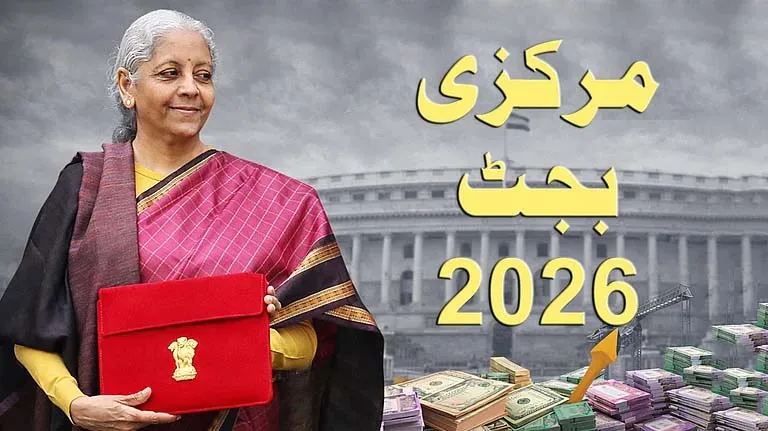
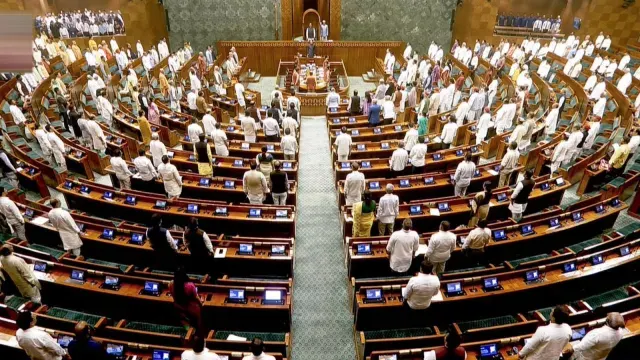
New Delhi, February 1 (UNI) Finance Minister Nirmala Sitharaman on Sunday presented a budget of Rs 53,47,315 crore for the fiscal year 2026-27, which aims to strengthen the economy to face global challenges, with a capital expenditure target of Rs 17,14,523 crore for the development of manufacturing, economic and social infrastructure to move towards "Viksit Bharat".
The budget does not provide any relief in individual income tax rates, but the minimum alternate tax (MAT) rate for industries has been reduced from 15 per cent to 14 per cent. The budget announces detailed measures to simplify procedures and compliance for investors and importers. In her one hour 25 minutes speech, the Finance Minister said that despite increasing capital expenditure, the aim is to limit the fiscal deficit to 4.3 per cent of GDP. The fiscal deficit for the current financial year has been 4.4 per cent, as against the budget estimate of 4.5 per cent.
The budget speech of Finance Minister Nirmala Sitharaman for the fiscal year 2026-27 was long and packed with announcements, but it lacked a clear and comprehensive vision for the overall economy. The budget speech seemed fragmented, divided into various sectors, schemes, and programs, giving the impression that the government has focused more on administrative activities and piecemeal reforms rather than strategic decisions.
The budget's main focus was again on capital expenditure. The government has proposed a capital expenditure of Rs 12.2 lakh crore for 2026-27, which is higher than the previous year. This includes infrastructure, manufacturing, and service sectors. The announcement of programs like the Bio Pharma Shakti program, Semiconductor Mission 2.0, Electronics Components Scheme, and various manufacturing incentives are part of this sequence. However, the question arises whether there is a clear economic narrative that connects these scattered schemes.
The speech did not shed sufficient light on the government's priorities and possible trade-offs. The absence of a direct mention of defense in the budget speech is notable, despite the increasing uncertainty of geopolitical situation and border tensions globally. Similarly, the rural economy's backbone, the MGNREGA scheme, which is now being presented with a new name, was not mentioned in the budget speech at all. This silence is more pronounced when employment, stagnant real wages, and inflation are serious issues in rural areas.
The budget emphasizes diversification in the agricultural sector and talks about 'high-value crops' like coconut, cocoa, sandalwood, and fruits. This strategy may benefit specific regions and traders, but the problems of those millions of farmers who produce grains, which are the foundation of the country's food security, seem to have been neglected in the budget speech. There is no clear stance on basic questions like minimum support price, government procurement, increasing costs, and instability in farm gate prices.
The budget does not provide immediate relief to salaried and middle-class people either. The government has talked about implementing the new income tax law from April 1, 2026, and emphasized simplifying procedures, but there is no change in tax rates or standard deductions. Here too, the focus is limited to simplifying rules rather than increasing income.
Regarding fiscal discipline, the government has reiterated its goal of keeping the deficit low and has stated that the fiscal deficit will be limited to 4.3 per cent of GDP. However, these numbers seem to be mere accounting caution rather than a long-term economic strategy. The estimates of non-debt receipts and total expenditure indicate that the government has limited room for policy decisions, but the budget does not clarify what priorities will guide future tough decisions.
Overall, the budget 2026-27 appears to be a document that lacks a clear and integrated vision on major economic questions, rural crisis, agricultural insecurity, employment, and middle-class purchasing power, despite not being short on schemes and announcements.
Related News
RSS decides to increase focus on youth and women
Awaz E Bihar
Government hiding truth on clash with China in Arunachal, country should be given full information: Kharge
Awaz E Bihar
Efforts to take the opposition into confidence regarding the women's reservation and delimitation bills
Awaz E Bihar