Iranian TV issues warning message for citizens in case of possible nuclear attack

Iran affairs expert and researcher at Lund University's Department of History and Human Rights, Roozbeh Parsi, told Al Jazeera that the real question is to what extent the reasons stated by the Iranian legislator prove to be practically effective.
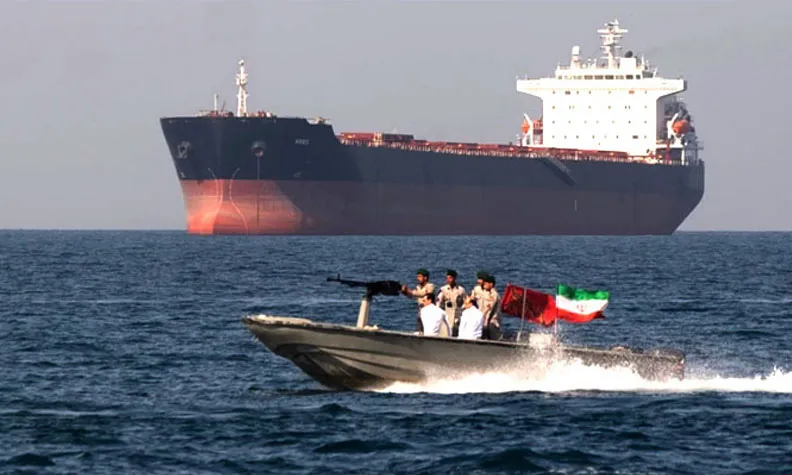
Iran has exempted vessels from India, China, Iraq and Qatar from restrictions on passing through the Strait of Hormuz. Amir Hayat Moghaddam, deputy head of the National Security and Foreign Policy Committee of the Iranian Parliament, announced this on Tuesday. Speaking to the Iranian Students' News Agency (ISNA), he said that vessels from these countries are passing freely and the Americans are not stopping them either. Iran had effectively closed the Strait of Hormuz in the initial days of the war between the US and Israel, which began on February 28, while the US had reimposed a naval blockade on Iran's southern ports in July. In this context, the question is why permission for transit through this vital maritime passage has been granted to these four countries, and whether their vessels can truly pass freely despite the continued American blockade. According to Amir Hayat Moghaddam, Iran will receive medicines from India and political support from China. Iran already has diplomatic support from Qatar, which is engaged in mediation efforts to end the ongoing war with the US and Israel. He said that Tehran will also collect transit fees from Indian and Chinese vessels, while Qatari vessels will be exempted from this. However, he did not clarify whether any fee would be charged from Iraqi vessels as well.
Iran affairs expert and researcher at Lund University's Department of History and Human Rights, Roozbeh Parsi, told Al Jazeera that the real question is to what extent the reasons stated by the Iranian legislator prove to be practically effective.
According to him, Iran has been facing sanctions for a long time, so the method of exchange of goods and mutual concessions in trade is not new for it. However, the difference in the current situation is that Iran wants to facilitate the transit of essential goods and services by creating loopholes in the sanctions. Nader Hashimi, Associate Professor of Middle Eastern Politics at Georgetown University, said that Iran is likely collecting a transit fee or a specific percentage of the value of the cargo in exchange for allowing these vessels to pass without any obstruction.
According to security and defence analyst and former Austrian Defence Attaché in Libya, Wolfgang Postai, Tehran's move is strategic in several respects. If it succeeds, Iran could gain significant revenue, as China is the largest buyer of Iranian crude oil and purchases approximately 90 percent of Iran's total oil exports.
According to him, by including Qatar and India in this exemption, Iran is trying to weaken support for Washington's war strategy. Not charging any fee for transit through Qatar is also part of this strategy.
Why is this exemption important for these four countries? All four countries rely heavily on the Strait of Hormuz for their exports.
According to Miao Shu, Senior Crude Oil Analyst at the analytical firm Kpler, of the 12.3 million barrels of crude oil passing through the Strait of Hormuz from the Persian Gulf daily in October, approximately 42 percent reached China and 13 percent reached India.
According to Rosetta Pars, China is the country that has the greatest capability to challenge U.S. interests, but the real question is whether Beijing is willing to pay the potential political price. Asian countries rely heavily on Gulf oil and gas, which are usually delivered via the Strait of Hormuz. Therefore, these countries have a lot to offer Iran in exchange for allowing ships to pass. Pars said that the shutdown of oil supplies from the Gulf would cause significant damage to India, which is also a major producer of medicines, some of which Iran cannot produce on its own.
According to Kepler, Qatar had not exported any liquefied natural gas (LNG) via the Strait of Hormuz in August, but in October it delivered 1.8 million tonnes of LNG. During the same period, its crude oil exports fell from 517,000 barrels per day to 193,000 barrels per day, while Iraq’s exports rose from 1.69 million barrels per day to 2.65 million barrels per day. According to Mei Shuo, Kepler failed to trace the original source of the Middle East’s crude oil, which can reach up to 2 million barrels per day, so the volume of exports from these two countries could be even higher.
admin