
National
 National
 National
 National
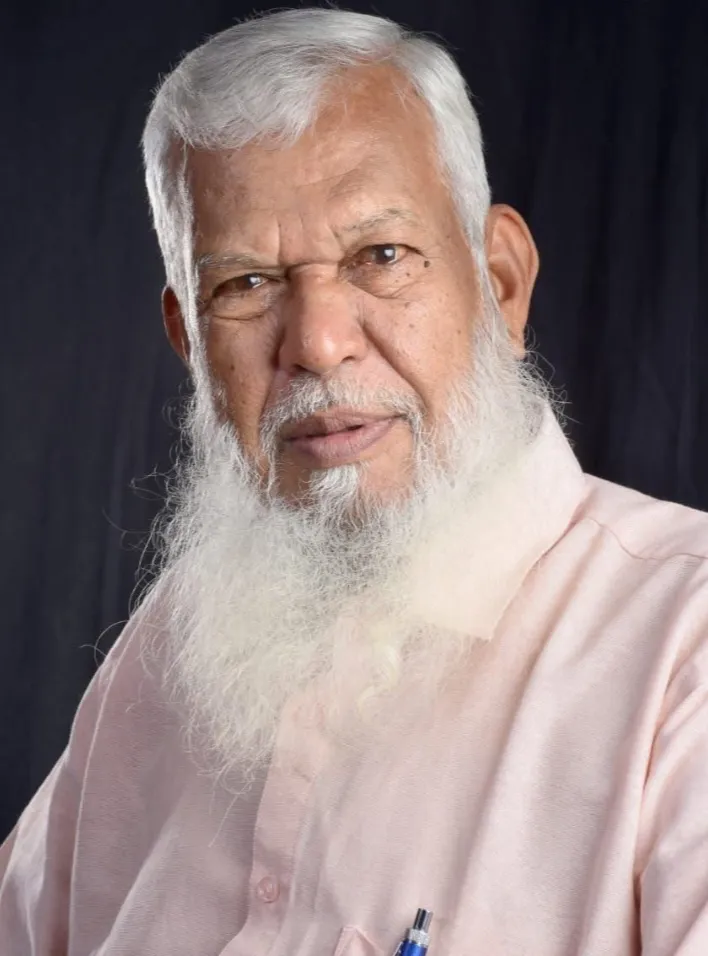
Reservation, social justice and OBC alliance flagbearer Shabir Ahmed Ansari passes away, marking the end of a long struggle
Awaze Bihar5 min read
Shabir Ahmed Ansari, a renowned OBC leader from Jalna district in Maharashtra and the founding president of the All India Muslim OBC Organization, passed away on March 22, 2026. He was approximately 70 to 75 years old and had been actively working for the rights of OBCs, particularly Muslim OBCs, for over 45 years. He is survived by his wife, three sons, and six daughters. His funeral will be held in Jalna at 9 pm.
Ansari was born into a farming family and, despite limited educational opportunities, began his struggle against social injustice. He organized rural and backward Muslim classes, such as Julaha, Qureshi, Nai, Teli, Mali, and other professional communities, who were socially and educationally backward despite being Muslim.
In 1978, he founded the All India Muslim OBC Organization with Vilaas Sonone and Hasan Kamal, through which he launched a strong movement across the state and country. Under his leadership, over 100 large gatherings were held, including notable rallies in Aurangabad and Lucknow, while a major rally on February 5, 1984/1986, is considered a significant turning point in the movement.
As a result of his consistent struggle, the Maharashtra government decided on December 7, 1994, to include socially and educationally backward Muslim classes in the OBC list. Subsequently, over 57 government resolutions (GR) were issued, facilitating certificates and other benefits for Muslim OBC classes.
Ansari played an active role in the implementation of the Mandal Commission's recommendations and supported the principle of reservation beyond religion. He opposed the proposal to allocate a sub-quota for minorities from the 27% OBC quota, stating it would create a divide between Hindu and Muslim OBCs and harm backward classes. He also advocated for the full implementation of the Ranganath Mishra Commission's recommendations.
During his struggle, Ansari faced severe opposition. Some sections of the ashraf class and organizations criticized him, accusing him of dividing the community, while he also faced personal attacks and threats, including an attempt to attack him with a knife. Nevertheless, he continued his movement.
Noted film actor Dilip Kumar also extended strong support to Ansari's movement. In 1990, Dilip Kumar accepted the patronage of Ansari's organization and participated in several gatherings. According to Ansari, Dilip Kumar referred to himself as the "gardener" of the movement and played a significant role in raising awareness against casteism.
Politically, Ansari maintained close ties with senior OBC leader Chhagan Bhujbal and the Nationalist Congress Party. Both leaders jointly struggled for OBC rights. They also participated together in the "OBC Maha Elgar" conference held in Ambad, Jalna, on November 17, 2023.
In 2024, when the Maharashtra government decided to include the Maratha community in the OBC category through a Kunbi certificate, Ansari, along with Chhagan Bhujbal, Prakash Shendge, and Vijay Wadettiwar, opposed the move, terming it a threat to OBC rights.
A book based on Ansari's life and struggle, "Mandal Namah," was released in 2024 at the Khilafat House in Mumbai, portraying him as a leader who sparked a social revolution despite limited resources.
Ansari never pursued politics for personal gain and never sought any significant position or benefit, earning him respect across various political parties. In 2025, he was hospitalized at the Tata Hospital in Mumbai due to poor health, where several leaders visited him.
Following his demise, condolence meetings are being held in Jalna, Aurangabad, Mumbai, and other regions. Chhagan Bhujbal, Vijay Wadettiwar, Abu Asim Azmi, Mohammed Arif Naseem Khan, and Aurangabad's Maulana Abdul Qayyum Nadvi, among other OBC leaders, have paid tribute to Ansari, stating that his death is a significant loss for the OBC movement.
Shabir Ahmed Ansari dedicated his life to Muslim OBC reservation, unity of backward classes, and social justice. The outcome of his struggle benefited thousands of families, and his work will be remembered as a strong foundation for future generations.
Ansari was considered the architect of the Muslim OBC movement. He founded the Maharashtra Muslim OBC Organization in 1984, organizing backward Muslim classes and leading a strong movement for their rights. Under his leadership, large-scale rallies and protests were held, resulting in the implementation of reservation for Muslim OBC classes in Maharashtra.
Ansari also worked with leaders like Sharad Yadav, Ram Vilas Paswan, and Karpoori Thakur to implement the Mandal Commission's recommendations. Born into a simple Banjara family in Jalna, Ansari devoted his life to the social, educational, and economic development of backward Muslims after completing his education.
He led an organized struggle to secure constitutional rights for Muslim artisans and played a crucial role in identifying and empowering them at the social and political levels. His autobiography, "Mandal Namah," is considered an important document of his struggle and the OBC movement.
Various social and political personalities have expressed deep sorrow and grief over his demise. Noted social and educational figure Saeed Ahmed Khan, who visited Ansari in Jalna, stated that his death marks the end of a glorious chapter in history. Khan described Ansari as a brave social leader, anti-caste activist, and true spokesperson for backward classes.
Congress national spokesperson Nizamuddin Raen said that Ansari's services for the educational and economic development of backward Muslims will always be remembered. He added that Ansari's struggle strengthened the OBC movement not only in Maharashtra but across the country, particularly during the tenure of Vilasrao Deshmukh.
Amp president Amer Edrissi, who was in Jalna during Ansari's final moments, described him as a dedicated and principled leader who always stood by his comrades. Edrissi recalled that during his movement, Ansari allowed the use of his office in Mumbai and provided support at every step.
All India Muslim OBC Organization national spokesperson Merza Abdul Qayyum Nadvi stated in his condolence message that Ansari's demise marks the end of an era. He said Ansari's philosophy was that "the fight for rights should start from the streets and reach the minds," and under this thought, he gave a new identity to backward classes.
Nadvi added that Ansari played a crucial role in implementing the Mandal Commission's recommendations and reaching out to Muslim backward classes. He organized marginalized communities in the 1970s and 1980s and raised his voice for their constitutional rights.
Ansari was also known as the "Jyotiba Phule of Muslim society" in social circles. The void created by his demise will be difficult to fill, but his struggle and services will always be remembered, serving as a guiding light for future generations.
Related News
RSS decides to increase focus on youth and women
Awaz E Bihar
Government hiding truth on clash with China in Arunachal, country should be given full information: Kharge
Awaz E Bihar
Efforts to take the opposition into confidence regarding the women's reservation and delimitation bills
Awaz E Bihar