
National National
 National
 National
Two more people arrested in Akshardham temple attack also acquitted with honor
Awaze Bihar4 min read
As a result of the legal struggle of Jamiat Ulema-e-Hind, the three individuals who were arrested later in the Akshardham temple attack case have also been acquitted with honor.
According to a release issued by Jamiat Ulema-e-Hind today, the names of those acquitted with honor are Abdul Rashid Suleman Ajmeri, Mohammad Farooq Mohammad Hanif Sheikh, and Mohammad Yasin alias Yasin Butt. The case was heard in a special POTA court in Ahmedabad, and after the hearing, Special Judge H.M. Raval of the POTA court acquitted them, commenting that earlier the Supreme Court had also acquitted the convicted accused due to insufficient evidence.
The learned judge also said that in view of the fact that no new evidence has come to light in the case against the three accused, except for the evidence accepted by the Supreme Court, therefore, these three accused are also being acquitted. Two of the three, Abdul Rashid Suleman Ajmeri and Mohammad Farooq Mohammad Hanif Sheikh, are residents of Ahmedabad.
It is worth noting that when the Akshardham temple attack took place, both of them were living in Riyadh, Saudi Arabia, for employment purposes, but they were also declared absconders. In 2019, when they returned from Saudi Arabia, the Crime Branch arrested them and sent them to jail. Their two other brothers, Adam Suleman Ajmeri and Salim Hanif Sheikh, were also arrested in the same terrorism case, who were later acquitted with honor by the Supreme Court.
On the request of these people, Jamiat Ulema-e-Hind provided legal assistance in this case as well.
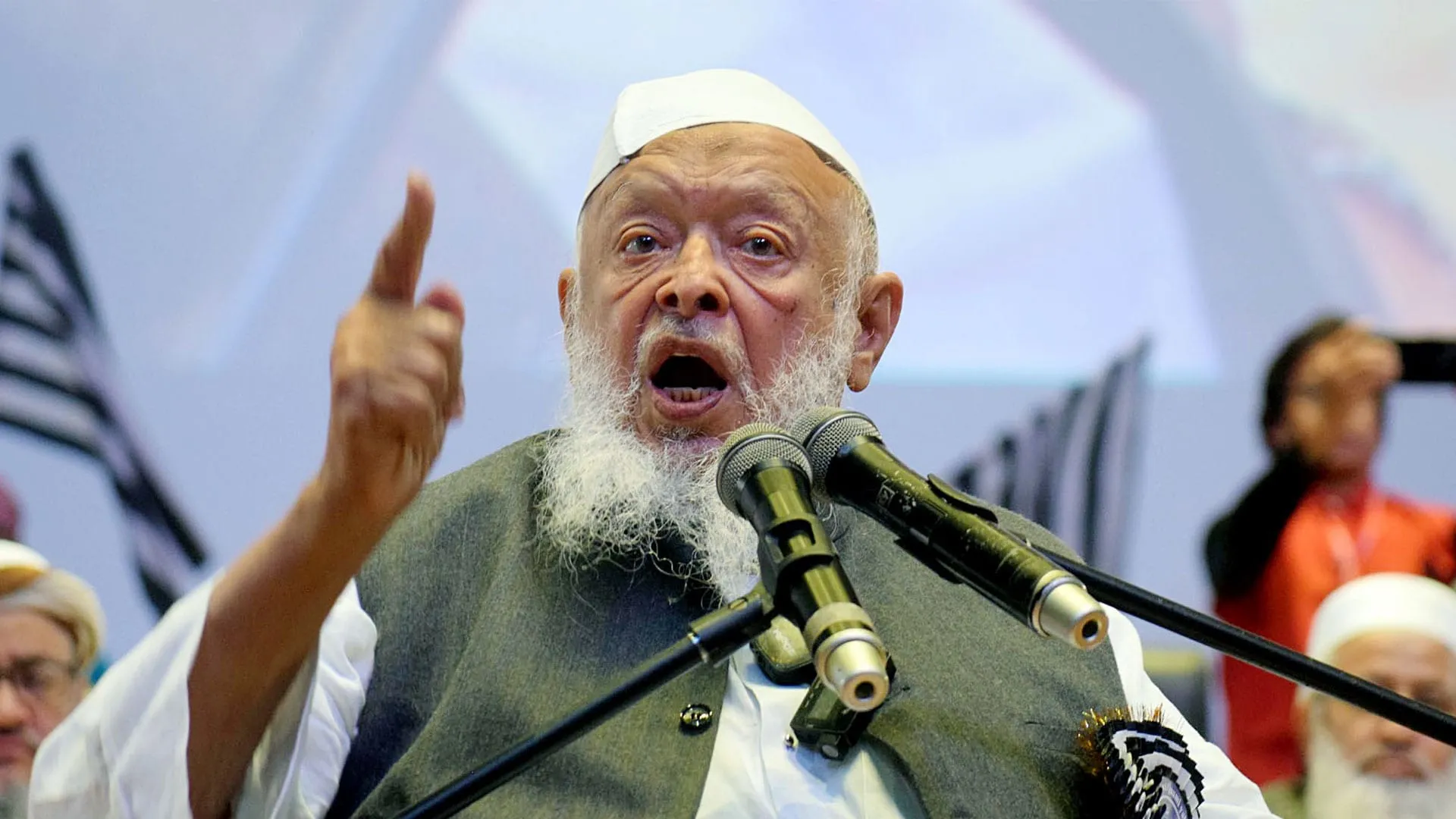
Jamiat Ulema-e-Hind President Maulana Arshad Madani welcomed the recent decision of the POTA court, calling it a victory of justice. In a statement, he said it is extremely satisfying that the POTA court has kept the Supreme Court's decision as a precedent and thus the release of the innocent has been possible.
He said that these people were innocent because when the attack took place on the Akshardham temple, they were not present there, yet they were made accused. He expressed deep regret that despite being innocent, it took them six years to get justice, which highlights the flaws in our legal system.
It is regrettable that in today's situation, it is not impossible but difficult for a particular community to get justice, and in this effort, the precious days of innocent people's lives are spent in the dark prison, but no one is held accountable for this, which further emboldens those who do such things.
Maulana Madani finally said that in our view, this justice will remain incomplete until accountability is fixed and those who ruined the lives of the innocent are not punished, this unfortunate series will not end.
Under the guise of law, the lives of innocent people will continue to be toyed with, and Jamiat Ulema-e-Hind has also filed an appeal in the Supreme Court for legal action against the guilty officers who toyed with the lives of innocent Muslims and to unmask them.
It is clear that in 2002, a terrorist attack took place on the Akshardham temple in Gandhinagar, Gujarat, in which a large number of devotees and police personnel were killed. About a year after the attack, the investigating agency Crime Branch's G.D. Bhanjara and other officers suddenly arrested Mufti Abdul Qayyum, Adam Suleman Ajmeri, Salim Hanif Sheikh, Maulana Abdullah, Chand Khan, and Altaf Hussain Malik on August 30, 2003, and claimed to have solved the case.
In 2007, the POTA court sentenced three of the arrested persons, Mufti Abdul Qayyum, Adam Suleman Ajmeri, and Chand Khan, to death for the attack on the Akshardham temple, while Salim Hanif Sheikh was sentenced to life imprisonment, Maulana Abdullah was sentenced to 10 years, and Altaf Malik was sentenced to 5 years.
In 2010, the Gujarat High Court also upheld the POTA court's decision. On the instructions of Jamiat Ulema-e-Hind President Maulana Arshad Madani, the Jamiat Ulema-e-Hind's Legal Aid Committee challenged this decision in the Supreme Court, and the Supreme Court acquitted all the accused in 2014 due to lack of evidence, while strongly criticizing the Gujarat police and investigating agencies for not investigating the case properly and framing innocent people.
After being acquitted by the Supreme Court, POTA court convict Mufti Abdul Qayyum wrote a book "11 Years Behind Bars" as a document of his innocence.
Related News
RSS decides to increase focus on youth and women
Awaz E Bihar
Government hiding truth on clash with China in Arunachal, country should be given full information: Kharge
Awaz E Bihar
Efforts to take the opposition into confidence regarding the women's reservation and delimitation bills
Awaz E Bihar