Chief Minister inspects Ganga ghats for Chhath festival preparations
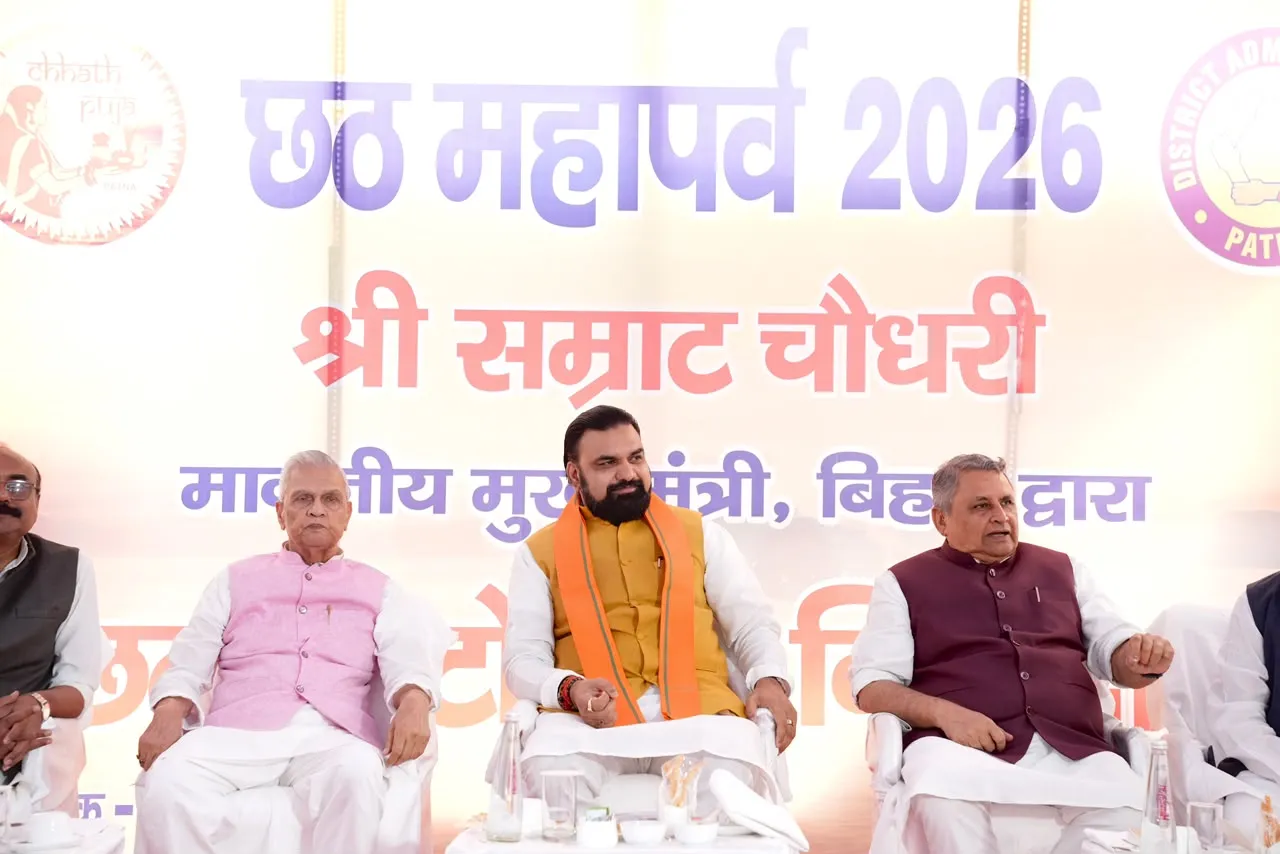
Arrangements have been made to give priority to Bihar's industrialists in government tenders up to Rs 50 crore. Under the Bihar Procurement Preference Policy, the state government will procure 25 to 40 percent of quality products manufactured in Bihar. Minister of Industry and Secretary will meet with industrialists every month: Smarot
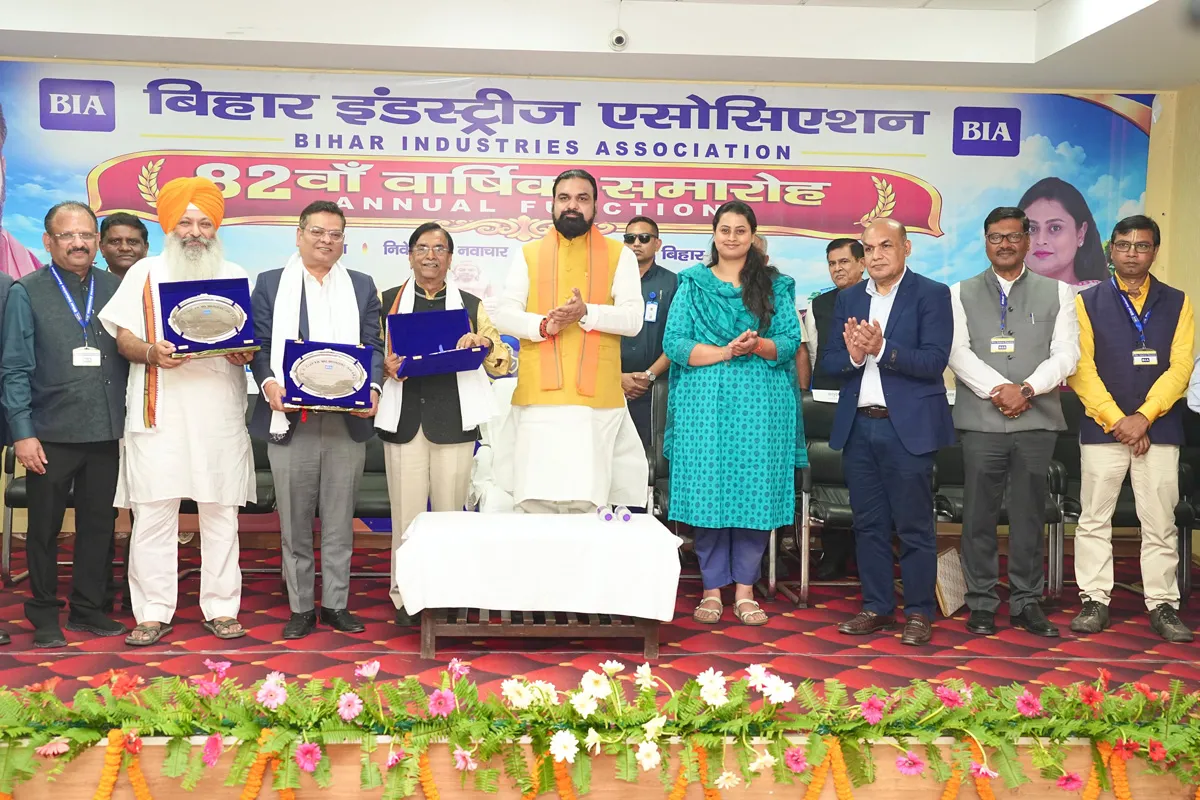
Patna, November 5: (ABN) The state government has announced a major initiative towards promoting investment and the immediate resolution of industrialists' issues to make Bihar industrially and economically strong. Chief Minister Smarot Choudhary said that a high-level meeting will now be held every month at the level of the Minister of Industry with the Bihar Industries Association (BIA) and other industrial bodies. These meetings will discuss the problems of industrialists, obstacles in the way of investment, and necessary changes in industrial policies. Notably, the participation of the District Magistrates and Superintendents of Police of the concerned districts will also be ensured so that the resolution of issues is not limited to paper work but also involves action on the ground. Addressing the 82nd annual function of the Bihar Industries Association on Thursday, the Chief Minister said that the Department of Industry will monitor these meetings and they will also be reviewed at the Chief Minister's level if necessary. He assured industrialists that the government will work with full seriousness to address their suggestions and resolve their issues. Smarot Choudhary said that the Bihar Industries Association, established in 1943, has played a significant role in the industrial and economic development of the state for the past 82 years. The government is striving to turn the aspiration of a developed India and a prosperous Bihar into reality, continuing on the path laid by former Chief Minister Nitish Kumar to make Bihar prosperous. He stated that progress has been made towards the establishment of over 1,000 large industrial units in the state in the past year. Land and other necessary facilities have been provided to investors, and administrative and legal obstacles in the way of industrial projects have been removed. Policies for semiconductors, Global Capability Centers (GCC), IT, and Artificial Intelligence (AI) have been formulated to give new impetus to investment, while the pharmaceutical policy has also been completed.
The Chief Minister said that the government is facilitating public procedures while providing a conducive environment for the establishment of industries. Under 'Ease of Doing Business', arrangements have been made to issue No Objection Certificates (NOCs) to industries within 30 days. Provision has also been made for automatic approval if approval is not received within the stipulated time. He stated that under the 'Sahayog Program', 96 percent of the 13 lakh applications received from the general public in the last five months have been resolved. Emphasising the development of infrastructure for industrial expansion, the Chief Minister said that an Industrial Manufacturing Cluster is being prepared in Gaya, while there is a plan to establish 12 new satellite townships in the state. These townships will be provided with residential facilities along with industrial corridors, schools, colleges, and other infrastructure. Planning has been done on approximately 80,000 acres of land for the Patliputra Township. There is a proposal to return 55 percent of the developed land to the landowners who provide the land. Those who provide land voluntarily will be given four times the compensation along with an additional 10 percent amount. Announcing a major target in the power sector, Smriti Choudhary said that there has been a significant increase in the availability and consumption of electricity in Bihar. Previously, electricity consumption was approximately 300 to 500 megawatts, which has now increased to more than 10,000 megawatts. The government has set a target of generating 30,000 megawatts of electricity by 2030. Work is being done rapidly to establish solar energy, pumped storage, thermal, and battery storage plants for this purpose.
He said that the ample availability of electricity and water is a basic requirement for the establishment of large industrial projects in the state. Addressing the issue of floods and silt accumulation in rivers, the Chief Minister said that approximately 50 lakh people are affected by floods every year in Bihar. A policy regarding silt management has been formulated for the permanent solution of this problem. He stated that this year, the water level in the Ganga, Gandak, and Son rivers remained quite high. A flow of approximately 11.5 lakh cusecs of water was recorded in the Son, while the water level of the Ganga remained the highest in the last 100 years. Work is also ongoing for better management of rivers and the cleaning of the Ganga. An agreement has been signed with the central government regarding the use of silt, and positive results are expected to emerge in the coming years. The Chief Minister said that investment in the education and health sectors is also necessary for the economic prosperity of Bihar. Large universities are being established in the state, and approximately 18,000 crore rupees are being provided to students every year for engineering, medical, and higher education through the Student Credit Card Scheme. There is a plan to develop hospitals and medical colleges in the health sector under Public Private Partnership (PPP). Facilities in district and sub-divisional hospitals will be improved so that patients do not have to go to large hospitals for minor treatment.
The government has decided to give preference to local industries in public procurement. The Chief Minister said that in government tenders up to 50 crore rupees, manufacturers associated with Bihār will be given priority. Under the Bihār Procurement Preference Policy, the state government will purchase 25 to 40 percent of standard products manufactured within the state. This will promote local industries, increase employment opportunities, and channel the state's wealth to the local economy. He also stressed the importance of strengthening the district economy. He said that by better utilizing the land and resources available in each district, industrial activities can be promoted. This will not only increase the overall production of the districts but also create new employment opportunities for local youth. He said that Bihār is ready to change its destiny and that the government, manufacturers, and the public must work together to meet the hopes of 14 crore people.
admin