Officials to prioritise and expeditiously resolve pending cases: Pankaj Kumar
Counselling, medical and rehabilitation facilities at centres to be strengthened: Ganjial
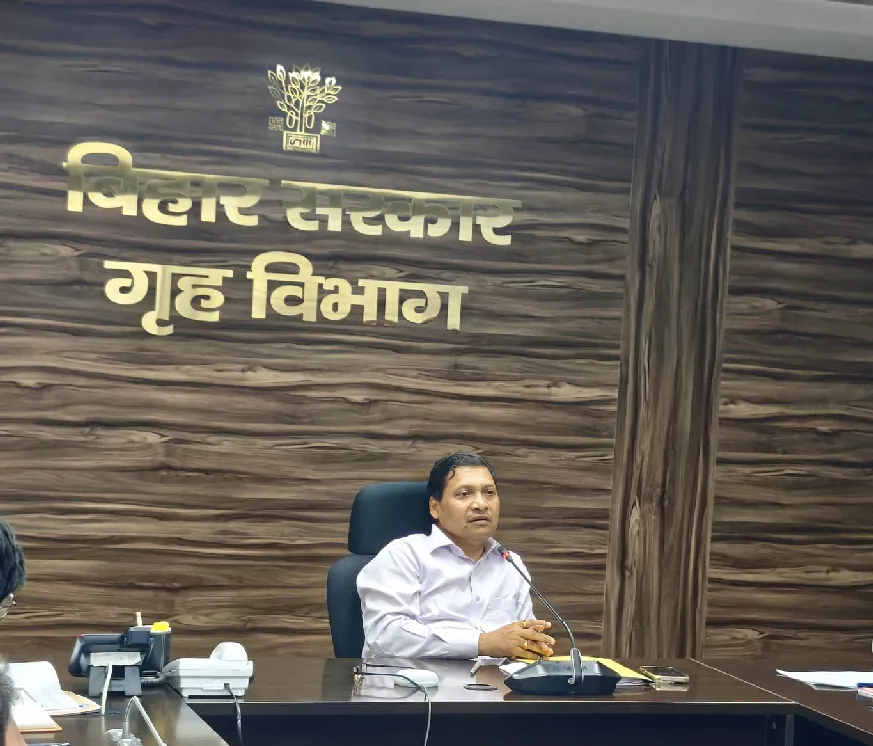
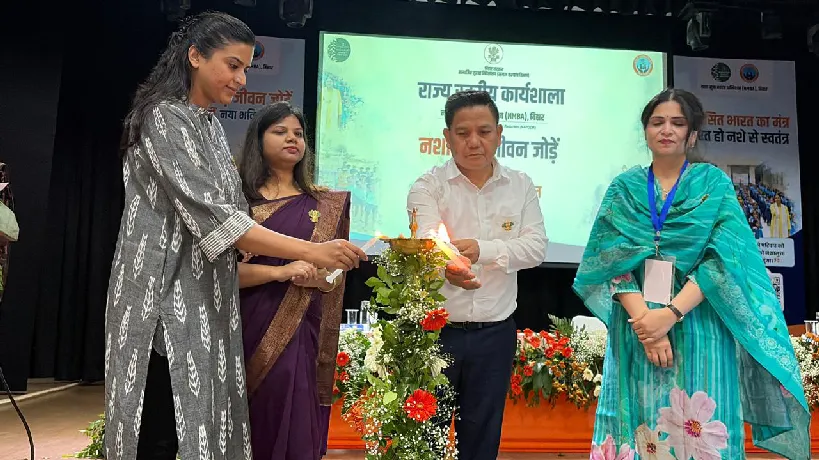
A major initiative is being launched to strengthen the de-addiction campaign in the state and empower young people who have quit drugs. Those undergoing treatment at de-addiction centres, particularly the youth, will be linked with skill training and employment opportunities. At the same time, trained counsellors, medical professionals, and other essential facilities at de-addiction centres will be strengthened so that better rehabilitation of these young people can be ensured after treatment and they can be prevented from relapsing. Secretary of the Department of Social Welfare, Vinod Singh Ganjial, said that the department will soon implement a special action plan for this purpose. He was addressing a state-level workshop organised by the Directorate of Social Security of the Department of Social Welfare at the Dharmanand Mandal Labour Planning and Study Institute in Patna.
The workshop discussed three topics: the de-addiction campaign, welfare of the disabled and early intervention in the field of disability, and the Accessible India Campaign for a developed India. In the financial year 2025-26, 9,527 awareness programmes were organised across the state, reaching 846,177 people with the message to quit drugs. He said that the quality, treatment arrangements, and available facilities at the 13 de-addiction centres operating in the state will be monitored regularly.
He stated that the suggestions received from various departments and experts at the workshop will be presented at the national workshop to make the implementation of the relevant schemes more effective.
Preparations are underway to start health screening at 101 foundation centres across the state to ensure timely identification and treatment of disabled children.
The age group of zero to six years is very important for the growth of children. Identification of any disability or health issue during this period and timely intervention can yield better results. According to the 2011 Census, there are 26.8 crore disabled persons in the country and 23.31 lakh in Bihar.
Under the Accessible India Campaign, work is also underway to make public places and transport facilities accessible for persons with disabilities. So far in Bihar, 44,755 government institutions and 45 websites have been made disability-friendly. 15 bus stands have also been made accessible. Furthermore, the process of purchasing 14 accessible buses to meet the transport needs of persons with disabilities is ongoing. The Secretary said that awareness, timely treatment, and the expansion of accessible facilities are the foundation for building an inclusive and empowered society.
Dr. Santosh, a specialist doctor from Nalanda Medical College, told the workshop that drug addiction is not just a physical problem but a complex issue involving biological, psychological, and social aspects. After the implementation of prohibition in 2016, a de-addiction unit was established in each of the 38 districts of Bihar, with two centres set up in Patna. The de-addiction centre at Nalanda Medical College has so far treated approximately 13,500 patients in the outpatient department. During this period, 3,500 to 4,000 patients have been admitted for treatment.
Various experts at the workshop expressed their views on all three topics and made suggestions for the effective implementation of the schemes. On the occasion, Enayat Khan, Managing Director of the Women and Child Development Corporation; Dr. Preeti, Director of the Directorate of Social Security; Mrs. Anjali Sharma, Director of the Empowerment of Persons with Disabilities; and officials and representatives from various departments were present.
Editor in Chief