In the coming times, there will be an increase in discussions on theories and concepts in Urdu criticism: Safdar Imam Qadri
Awaze Bihar5 min read
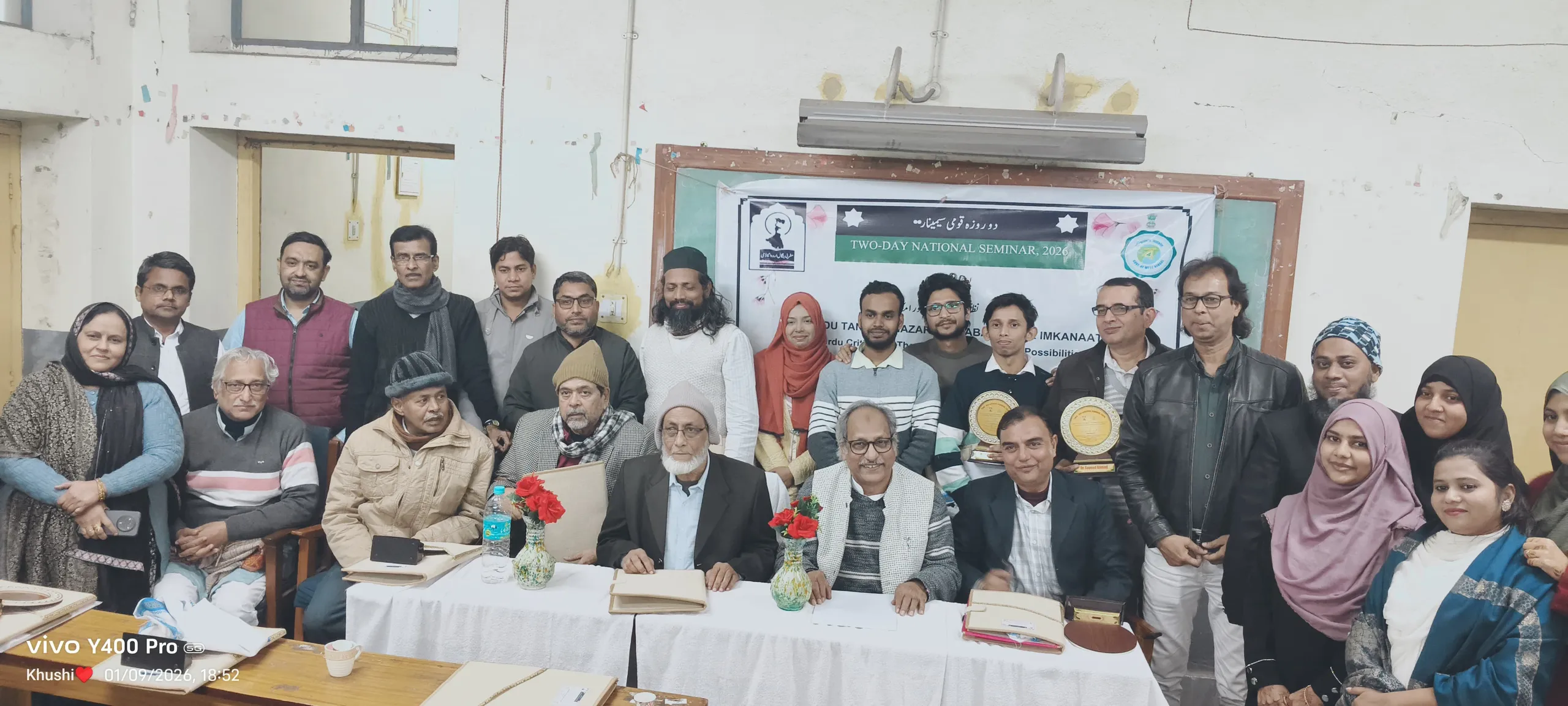
Hooghly: (Press Release) The Department of Urdu, Hooghly Mohsin College, in collaboration with the West Bengal Urdu Academy, organized a two-day national seminar on the topic "Urdu Criticism: Theories, Debates, and Possibilities". The seminar was held on January 8 and 9, 2026, and was attended by prominent critics, Urdu teachers, researchers, and students from various parts of the country. The objective of the seminar was to promote serious and academic discussions on the theoretical foundations, contemporary debates, and future possibilities of Urdu criticism.
The seminar was inaugurated by the college's principal, Prasanth Pramanik. Dr. Muhammad Humayun Jamil Khan welcomed all the guests. In the inaugural session, the special guest, Nazhat Zainab, Secretary of the West Bengal Urdu Academy, said that the services of the Urdu Academy are a shining chapter in the promotion of the Urdu language and literature. This institution is not only active in the teaching and promotion of Urdu but also plays an important role in strengthening the role of Urdu in the Ganga-Jamuni culture of West Bengal.
The academy has organized courses, workshops, and teacher training programs for the education of the Urdu language in various districts of the state, which has increased the trend of learning and understanding Urdu among the new generation. In addition to the Urdu-speaking class, the academy's efforts to connect non-Urdu speakers with Urdu are also notable. She further stated that the West Bengal Urdu Academy is providing its support for the seminar for the third time, and it is the first time for Hooghly Mohsin College, and hopefully, it will continue in the future.
She added that one of the major tasks of criticism is to clarify the relationship between literature and society. A good critic brings out the social attitudes, class struggles, gender awareness, and cultural values hidden in literature. In this way, criticism connects literature to life. Dr. Dabeer Ahmed, Head of the Urdu Department, Maulana Azad College, said that this seminar is not just an academic gathering but a serious effort to advance the intellectual dialogue of Urdu criticism, whose effects will be long-lasting.
The importance of Urdu criticism is the spiritual and intellectual foundation of Urdu literature. Criticism is the mirror in which literature sees its strengths, weaknesses, and possibilities. If creation is the body of literature, then criticism is its intellect and consciousness, which gives it direction and meaning. Urdu criticism has given literature the awareness to understand it on a intellectual, social, and cultural level, rather than just emotional expression.
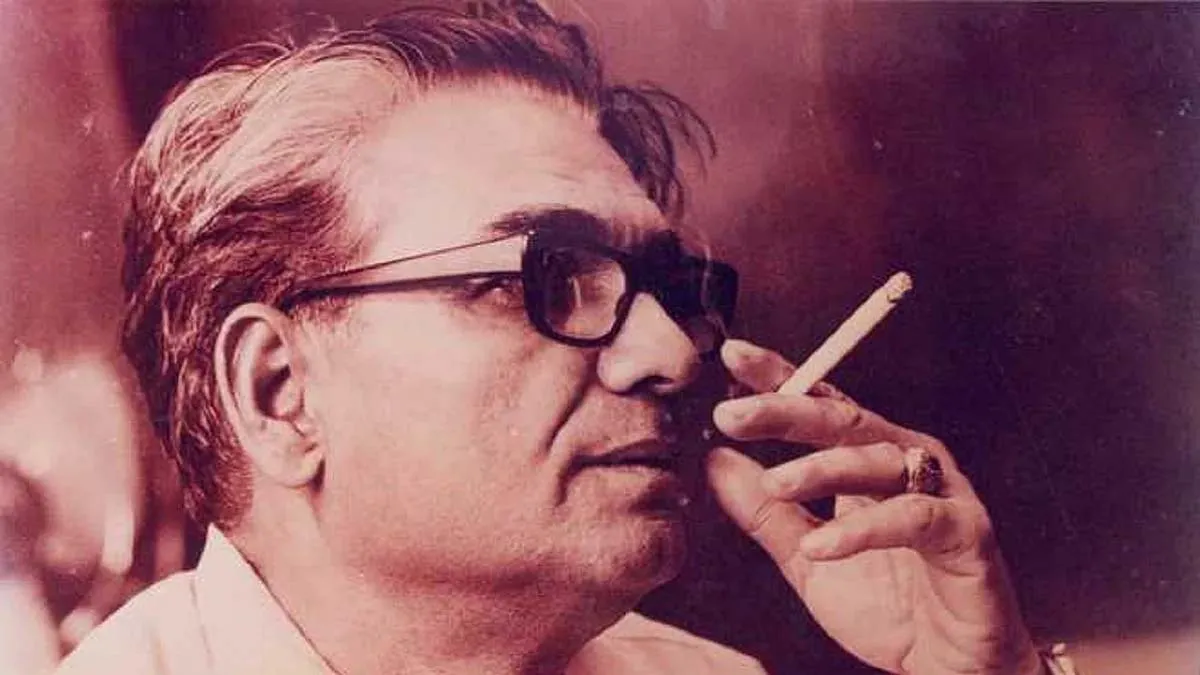
The keynote speaker of the seminar, Professor Safdar Imam Qadri (Department of Urdu, College of Commerce, Arts and Science, Patna), first made criticism a topic of discussion at the global level and talked about the meaning of Eastern and Western concepts in the modern era. He discussed in detail the need and usefulness of criticism in literature and society. He introduced famous critical theories from around the world and emphasized that in the coming time, the attention of Urdu critics will increase towards theories and concepts.
He talked about the history of Urdu criticism, recognizing the concepts present in ancient poetry, especially in Deccani masnavis, as the first example of criticism. He considered the texts of tazkiras as the second lesson of criticism. Then, he shed light on the new school of criticism established by Hali and its services and characteristics. He drew the special attention of teachers and other critics to the formation of a high critical temperament in Urdu literature.
In the inaugural session, Dr. Omar Ghazali presented the presidential address, saying that it is essential to synchronize Urdu criticism with contemporary requirements and connect it with international theories. He considered modern critical approaches as opening new intellectual doors for Urdu literature. He added that Urdu criticism is not just an interpretation of literature but also an expression of the intellectual and social awareness of the era.
The seminar consisted of six sessions, with various papers presented on topics such as scientific, classical, structural criticism, modern theories, postmodern criticism, post-colonial thought, and cultural criticism. The speakers analyzed the theoretical framework of Urdu criticism, presenting its strengths and weaknesses in a detailed manner. The first session was chaired by Safdar Imam Qadri, and the paper presenters included Dr. Dabeer Ahmed, Dr. Muhammad Humayun Jamil Khan, Dr. Syed Ali Arfan Naqvi, and Ms. Neek Parveen.
The second session was also chaired by Safdar Imam Qadri, with paper presenters emphasizing the need to connect Urdu criticism with contemporary social, cultural, and intellectual issues. The papers presented by young researchers were particularly appreciated for indicating new directions in Urdu criticism. The session was attended by Dr. Turnam Mishtaq, Dr. Shabnam Parveen, Dr. Muhammad Shafqat Kamal, Dr. Aleem Hashmi, Syed Asif Abbas Merza, and Afaq Haider.
The third session included papers by Dr. Arshad Ahmed, Dr. Shaheen Parveen, Muhammad Taib Naumani, Dr. Mazhar Ali, Durkshaan Shammim, Abdul Qadir, and Ms. Naghma Parveen. The fourth session was chaired by Kaleem Haq, with paper presenters including Dr. S.M. Hashmi, Dr. Omar Ghazali, Dr. Muhammad Farooq Azam, Dr. Noor-un-Nisa, Dr. Saeed Ahmed, Ms. Neaha Parveen, and Muhammad Azharuddin.
The fifth session was chaired by renowned dramatist and critic Zahoor Anwar, with paper presenters including Kaleem Haq, Abu Zafar Hashmi, Dr. Sanjar Hilal Bharti, Dr. Jamshed Ahmed, Muhammad Mushkoor Alam, Ms. Gulshan Ara, Muhammad Taib Ali, and Ms. Shazia Parveen. The sixth session was chaired by Abu Zafar Hashmi, with paper presenters including Zahoor Anwar, Dr. Arshad Alam, Muhammad Khurshid Alam, Shabnam Parveen, Chandni Rahman, Rafia Shabnam, and Bushra Nashat.
The valedictory session was chaired by Safdar Imam Qadri and Zahoor Anwar. Safdar Imam Qadri said that the West Bengal Urdu Academy has organized literary activities such as mushairas, seminars, discussions, and conferences, which have provided opportunities for poets, writers, and researchers from across the state to express themselves. Zahoor Anwar said that the papers presented in the seminar have proven that Urdu criticism is still full of new questions and possibilities.
Kaleem Haq said that the discussions on the possibilities of Urdu criticism that took place here can serve as a guide for the new generation. Such seminars are a pressing need of the time. Abu Zafar Hashmi said that the papers presented in the six sessions with such seriousness and intellectual depth indicate that the future of Urdu criticism is very bright. The seminar concluded with the hope of a bright future for Urdu criticism, which is also a guarantee of its success.